
What’s in Prevagen? The Full Label, Ingredient by Ingredient
Prevagen’s entire formula is two active ingredients: apoaequorin, a lab-made jellyfish protein, at 10 to 40 mg depending on the variant, plus 50 mcg (2,000 IU) of vitamin D3. That is the whole story on the front of the label. The back of the label adds capsule fillers, including milk- and soy-derived carriers on the Regular Strength formula. RecallPath Editorial Team verified every line against the NIH dietary supplement label database, the manufacturer’s FAQ and independent clinical references.
Written and fact-checked by RecallPath Editorial Team. Last updated: . About our editorial process.
- Active ingredient: apoaequorin. Regular Strength 10 mg, Extra Strength 20 mg, Professional 40 mg (prevagen.com).
- Second active: vitamin D3, 50 mcg (2,000 IU) in every variant (GoodRx; manufacturer FAQ).
- Apoaequorin origin: a protein from the jellyfish Aequorea victoria, produced synthetically in a lab (WebMD; Banner Health).
- Capsule contents beyond the actives: microcrystalline cellulose, vegetable capsule, salt and magnesium stearate on the Extra Strength label in the NIH database; Regular Strength adds milk- and soy-derived carriers.
- What is not inside: no caffeine, no bacopa, no citicoline, no phosphatidylserine. One protein, one vitamin, nothing else.
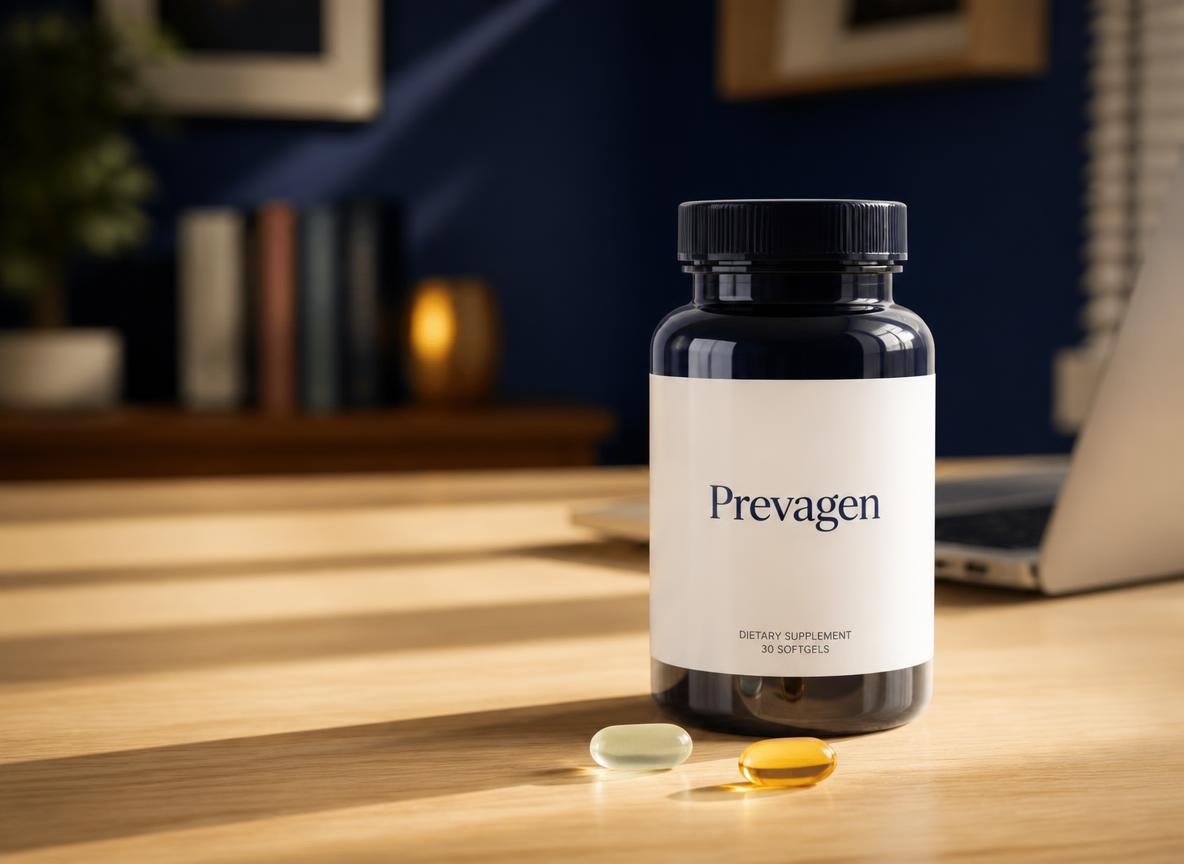
The active ingredients, line by line
Apoaequorin: the jellyfish protein
One protein, three doses, one theory
What it is. Apoaequorin is a calcium-binding protein originally isolated from Aequorea victoria, the jellyfish that also gave science green fluorescent protein. The version in Prevagen is not harvested from jellyfish: it is a synthetic, lab-made copy, produced through recombinant fermentation (Banner Health).
The marketed theory. The idea is that apoaequorin binds excess calcium in neurons. Calcium overload is real and is linked to cell death in aging brain tissue, so the theory has a plausible kernel.
The digestion problem. The kernel has a hole: apoaequorin is a protein, and proteins are digested. A digestion-model study found more than 90 percent of apoaequorin is broken down by stomach pepsin within 30 seconds (ConsumerLab). Banner Health’s Alzheimer’s Institute researchers note the structure is likely broken down in the gut before any of it could reach the brain. No study shows orally taken apoaequorin crosses into brain tissue.
The regulatory footnote. In 2012 the FDA warned Quincy Bioscience that it considered synthetic apoaequorin a “new drug” and therefore not an acceptable supplement ingredient, according to ConsumerLab’s review. The product has remained on the market as a supplement ever since.
Vitamin D3: the quietly ordinary second ingredient
Every Prevagen variant adds 50 mcg of vitamin D3, which equals 2,000 IU. For context, the NIH Office of Dietary Supplements puts the recommended intake at 600 IU daily for adults up to 70 and 800 IU above that, with an upper limit of 4,000 IU. Prevagen’s dose is two to three times the recommendation and sits halfway to the upper limit.
Vitamin D is genuinely relevant to cognition: deficiency is common in older adults, and low D mimics memory problems. But 2,000 IU of D3 is also available in a three-cent tablet at any pharmacy. If vitamin D is what you need, Prevagen is an expensive delivery vehicle for it. If you already supplement D, count Prevagen’s 2,000 IU toward your daily total and stay under the 4,000 IU ceiling.
The rest of the capsule
The NIH Dietary Supplement Label Database entry for Prevagen Extra Strength lists the full other-ingredients line: microcrystalline cellulose, vegetable capsule (cellulose, water), salt and magnesium stearate. Standard capsule construction. The Regular Strength label, per published label reviews, additionally carries carriers derived from the protein’s fermentation process, including milk- and soy-derived components. If you have a milk or soy allergy, read the Regular Strength allergen line before buying. The capsule itself is vegetarian.
What is not in Prevagen
Absences that define the formula
- No caffeine, no stimulants. The energy some users report is not pharmacological.
- No bacopa monnieri, no citicoline, no phosphatidylserine. The best-evidenced memory ingredients in the category are all absent.
- No B vitamins, no herbs, no blends. Nothing to hide behind a proprietary-blend label, because there is no blend.
- Total active mass: about 60 mg. One capsule of any multi-ingredient competitor typically carries ten times that.
Does the one-protein formula work?
The ingredient’s entire human evidence base is the Madison Memory Study: 218 adults, 90 days, no statistically significant benefit over placebo for the group as a whole, with the positive signal confined to a post-hoc subgroup analysis. A 2024 federal jury found Prevagen’s memory claims lacked scientific support. We cover the trial, the FTC case and the verdict in our Prevagen review, and the documented adverse-effect profile on our Prevagen side effects page. The short version for an ingredients page: the formula is minimal, the doses are exactly as labeled, and the proof behind its only marketed active is the weakest part of the bottle.
The bottom line
Prevagen contains exactly what its label says: apoaequorin at 10, 20 or 40 mg depending on the variant, 50 mcg of vitamin D3, and standard capsule fillers. The transparency is real, and in this category that is worth noting. What the two-ingredient formula cannot offer is the one thing the category’s best products lead with: a second active ingredient with human trial data. Bacopa, citicoline and phosphatidylserine all have published positive trials at labeled doses. None of them are in this capsule. For the formulas that do combine the studied ingredients at studied doses, see our Neuriva vs Prevagen comparison and the best memory supplements of 2026 breakdown.
Frequently Asked Questions
What is the active ingredient in Prevagen?
Apoaequorin, a synthetic copy of a calcium-binding protein from the jellyfish Aequorea victoria. Per the manufacturer, the dose is 10 mg in Regular Strength, 20 mg in Extra Strength and 40 mg in the Professional formula. Every variant also contains 50 mcg (2,000 IU) of vitamin D3.
What are the ingredients in Prevagen?
Two active ingredients: apoaequorin (10 to 40 mg depending on the variant) and vitamin D3 (50 mcg). The capsule itself contains excipients. The NIH label database lists for Extra Strength: microcrystalline cellulose, vegetable capsule, salt and magnesium stearate. Regular Strength additionally carries milk- and soy-derived carriers from the protein’s fermentation process.
Is the jellyfish story real?
The protein is real, the jellyfish is real, and the connection is real. Apoaequorin was originally isolated from Aequorea victoria. What the marketing leaves out: no jellyfish are harvested for Prevagen. The ingredient is a lab-made synthetic version produced by recombinant fermentation, confirmed by Banner Health researchers and ConsumerLab.
What is in Prevagen Extra Strength?
Exactly the Regular Strength formula with one change: 20 mg of apoaequorin instead of 10 mg, plus the same 50 mcg of vitamin D3 and the same capsule excipients. There are no additional active ingredients in Extra Strength, and no study has tested the 20 mg dose specifically.
Does Prevagen have vitamin D?
Yes. Every variant contains 50 mcg (2,000 IU) of vitamin D3, confirmed by the manufacturer and GoodRx’s supplement review. That is two to three times the NIH recommended intake of 600 to 800 IU and half the 4,000 IU upper limit. If you take separate vitamin D, count Prevagen toward your daily total.
Does Prevagen contain caffeine?
No. Prevagen’s formula lists no caffeine or other stimulants in any variant. The only actives are apoaequorin and vitamin D3. Any perceived energy effect while taking it is not from a stimulant, since there is none in the capsule.
What is apoaequorin used for?
Inside Prevagen, it is marketed to support memory and healthy brain function by binding excess calcium in neurons. Outside Prevagen, the protein family is famous in science: apoaequorin is the calcium-sensitive partner of aequorin, the bioluminescent system studied in Aequorea victoria that helped enable modern fluorescence microscopy. Its role in a supplement is far less established than its role in a laboratory.
Where can I see the actual Prevagen label?
The NIH Office of Dietary Supplements runs a public Dietary Supplement Label Database (dsld.od.nih.gov) with Prevagen’s Extra Strength and Professional labels, including the full other-ingredients lines. The manufacturer publishes the same information in its FAQ. Third-party write-ups like Wholistic Research’s are summaries of these primary sources, and the primary sources are the ones worth citing.
Sources and References
- Prevagen Extra Strength label, full ingredient list – NIH Dietary Supplement Label Database
- Prevagen FAQ: 10-40 mg apoaequorin plus 50 mcg vitamin D – prevagen.com
- Prevagen for memory: uses, side effects, effectiveness – GoodRx, 2024
- What is apoaequorin? – WebMD
- Will apoaequorin really improve your memory? – Banner Health, 2023
- Apoaequorin – Merck Manual, Professional Version
- Does Prevagen really improve memory? – ConsumerLab
Need help choosing?
RecallPath does not sell supplements. We publish facts for readers over 40.
Email us