
Prevagen Review 2026: One Study, One Court Case, One Verdict
Prevagen is the best-selling memory supplement in the United States and the most sued-over. Its entire evidence base is one company-funded, placebo-controlled trial that missed its primary endpoint, and in 2024 a federal jury found its memory claims lacked scientific support. The product is probably safe for 90 days. The benefit is unproven. RecallPath Editorial Team reviewed the trial, the court record and the label so you can decide with sources in hand.
Written and fact-checked by RecallPath Editorial Team. Last updated: . About our editorial process.
- What it is: apoaequorin (10 mg Regular, 20 mg Extra Strength, 40 mg Professional) plus 50 mcg (2,000 IU) of vitamin D3 per capsule (label, per ConsumerLab).
- The evidence: one published placebo-controlled trial (Moran, 2016, authored by company employees): no statistically significant benefit over placebo for the group as a whole. A post-hoc subgroup suggested a small effect; independent reviewers call it unreliable.
- The legal record: FTC + NY AG sued in 2017; Second Circuit reinstated the case in 2019; a 2024 jury found the claims unproven and the court barred all eight marketing statements nationwide. Appeal argued in 2026.
- The price: $59.95 per month for Extra Strength and $89.95 for the Professional 40 mg formula (prevagen.com). The NY Attorney General cited up to $89.95 per 30-day supply.
- Consumer Reports: did not include Prevagen among supplements that might help; it quotes a Cleveland Clinic physician: “I tell my patients not to take Prevagen.”
What Prevagen is, exactly
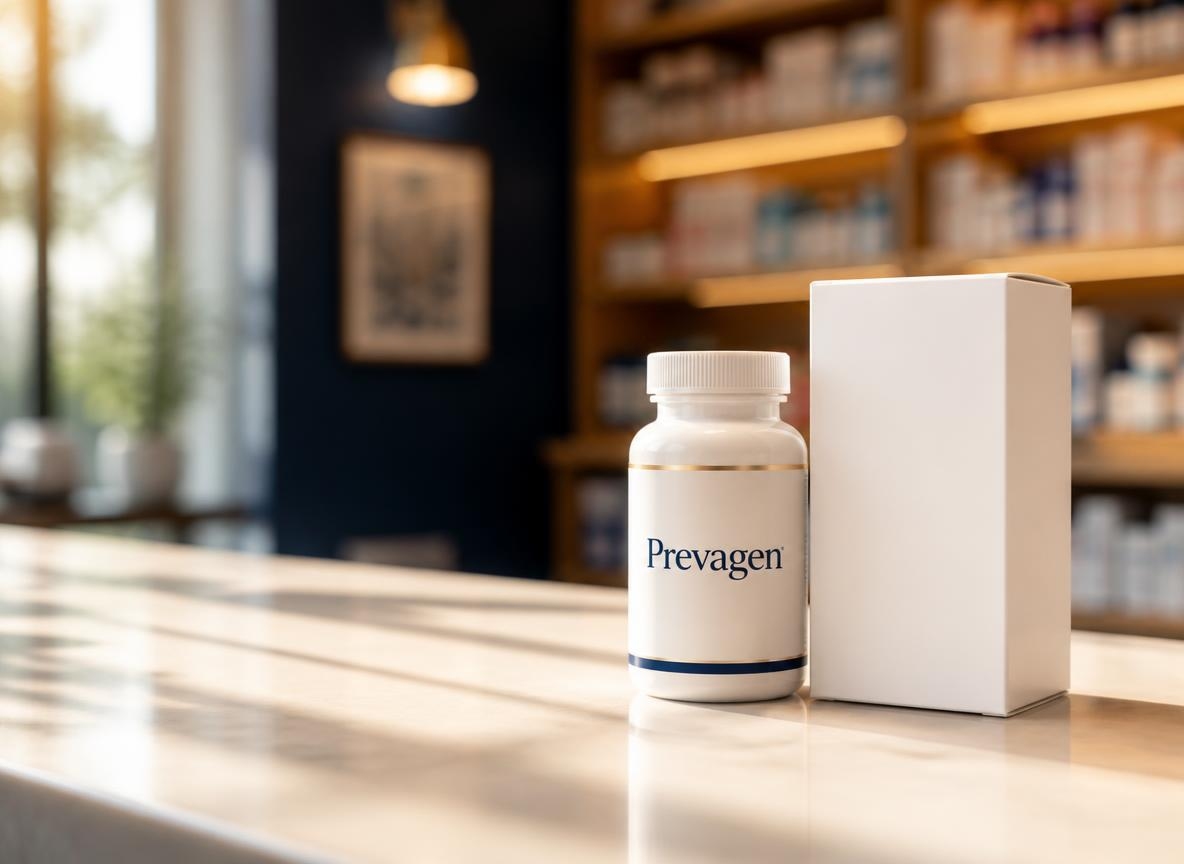
Prevagen is made by Quincy Bioscience of Middleton, Wisconsin. The formula has two active ingredients and almost nothing else.
Apoaequorin is a synthetic copy of a protein from the jellyfish Aequorea victoria, made with genetically modified bacteria (ConsumerLab). The marketing theory: the protein binds excess calcium in brain cells and protects memory. Two problems follow. First, no study shows that orally swallowed apoaequorin reaches the brain. Second, a digestion-model study found more than 90 percent of apoaequorin is broken down by stomach pepsin within 30 seconds (Moran, Regul Toxicol Pharmacol, 2014, cited by ConsumerLab). The theory dies before the trial even starts.
The evidence, decoded
The Madison Memory Study: the one trial that matters
Design. 218 adults aged 40 to 95 with self-reported memory concerns, randomized 3:2 to 10 mg apoaequorin or placebo, 90 days, nine computerized cognitive tasks (CogState battery), published in 2016 by authors employed by Quincy Bioscience.
Primary result: no statistically significant benefit over placebo for the study population as a whole. Not on one of nine tasks.
The subgroup rescue. A post-hoc analysis of 97 participants with mild subjective impairment showed verbal learning improving 10.86 percent (placebo 3.79 percent) and delayed recall 15.82 percent (placebo 7.41 percent). Post-hoc means the hypothesis was shaped after the data arrived. Independent reviewers note that even taken at face value, a 10 percent gain on a 12-word list equals roughly one extra word.
Regulatory context. The FDA warned Quincy in 2012 that it considered synthetic apoaequorin a “new drug,” not an acceptable supplement ingredient (ConsumerLab). The FTC and New York Attorney General sued over the claims in 2017.
Bottom line from the 2024 peer-reviewed literature: “There are no reliable data of clinical efficacy for Prevagen in any human condition” (Review of Supplements for Dementia, PMC11727725).
What independent reviewers say
Consumer Reports, August 2024
CR surveyed 2,022 U.S. adults in May 2024 and found 43 percent had heard of Prevagen. Its supplements guide declined to include it among products that might help, noting the FTC and New York actions and concluding the research shows the product “simply does not work.” The guide quotes Matthew Badgett, MD, of the Cleveland Clinic: “I tell my patients not to take Prevagen.”
ConsumerLab’s independent review reaches the same destination more quietly: there is little evidence Prevagen provides meaningful memory benefit, and the extent of potential improvement “appears to be minimal.”
The price and the variants, side by side
Prevagen has been marketed with memory claims on its packaging since at least 2011 and on national television since 2013 (NY Attorney General). FTC records show $165 million in sales between 2007 and 2015, when a bottle ran $24 to $68. Today the direct prices are public:
Who might try it, and who should skip it
Might try it: a healthy adult who understands the evidence, wants a 90-day personal experiment and can afford $45 to $90 a month without expectation. That is a legitimate choice. Judge it at day 90, like the trial did.
- Skip it if you want a proven effect. The single controlled trial found none for the group as a whole.
- Skip it if you take blood pressure medication. Combination apoaequorin products may shift blood pressure either direction (Merck Manual). The full safety picture lives on our Prevagen side effects page.
- Skip it if you are pregnant or breastfeeding. No safety data (RxList).
- Skip it if your memory is getting worse on a timeline. Progressing memory loss needs a physician, and no supplement decision should delay that visit.
What the same money buys with actual trial data
If the goal is memory support with human evidence behind it, two ingredients have what apoaequorin lacks. Citicoline at 500 mg daily improved episodic memory in a 12-week randomized trial of 100 adults with age-associated memory impairment (Nakazaki et al., J Nutr, 2021, PMID 33978188). Bacopa monnieri at 300 mg standardized extract improved delayed word recall in a 12-week trial of 46 adults (Stough et al., Psychopharmacology, 2001, PMID 11498727). Neither is cheap magic. Both have something Prevagen never produced: a positive primary result in print. Our citicoline 500 mg supplements guide and the best memory supplements of 2026 comparison show which formulas actually hit those doses. For the head-to-head against this bottle, see our Memodyne vs Prevagen breakdown.
The verdict
Our call, in one paragraph
Prevagen is a well-marketed single-ingredient product whose only controlled trial missed its primary endpoint and whose claims were rejected by a federal jury in 2024. It is probably safe for 90 days at 10 mg. It is not proven to improve memory in any human condition, the FDA once called its ingredient a new drug, and $59.95 to $89.95 a month buys ingredients elsewhere that have real trial data behind them. If you still want to test it personally, do it with eyes open and a day-90 exit plan. Everyone else should spend the money on what the evidence actually supports.
Frequently Asked Questions
Does Prevagen really work?
Not proven. The one published placebo-controlled trial (Moran, 2016, 218 adults, 90 days) found no statistically significant memory benefit over placebo for the group as a whole. A 2024 peer-reviewed review concludes there are no reliable data of clinical efficacy for Prevagen in any human condition, and in 2024 a federal jury found its marketing claims lacked scientific support.
Is Prevagen effective?
The evidence says no for the average user. The company’s own controlled study showed no significant effect overall; only a post-hoc subgroup analysis suggested a small benefit, and independent reviewers judge that analysis unreliable. ConsumerLab’s verdict: little evidence of meaningful benefit, and the extent of potential improvement appears minimal.
Is Prevagen safe?
For most healthy adults, 10 mg daily for up to 90 days appears low-risk: no serious adverse events occurred in the company trial. Documented possible effects include headache, dizziness and nausea, and overall safety, interactions and long-term use are unverified (Merck Manual). The complete list, with sources, is on our Prevagen side effects page.
What is Prevagen used for?
Prevagen is marketed for healthy brain function, a sharper mind and clearer thinking in adults with normal age-related memory concerns. The label disclaimer states its claims are based on a clinical study of subgroups of cognitively normal or mildly impaired individuals. It is not intended to diagnose, treat, cure or prevent any disease, including Alzheimer’s.
How much does Prevagen cost?
Per prevagen.com in November 2026: Extra Strength 20 mg runs $59.95 for 30 capsules, about $1.99 per day. The Professional 40 mg formula runs $89.95 for 30 capsules. The New York Attorney General’s 2024 release cites up to $89.95 for a 30-day supply. Retail prices vary.
Is Prevagen FDA approved?
No, and no dietary supplement is FDA approved. The FDA regulates supplements as food, not drugs. In 2012 the FDA warned Quincy Bioscience that it considered synthetic apoaequorin a new drug and therefore not an acceptable supplement ingredient, according to ConsumerLab’s review. Prevagen remains on the market as a supplement.
Is there a generic Prevagen?
No. Apoaequorin is a branded, company-patented ingredient; there is no generic version and no equivalent molecule sold as one. Products advertised as a Prevagen alternative are different supplements with different evidence. The honest cheaper route is ingredients with published positive trials at studied doses, such as citicoline 500 mg or bacopa monnieri 300 mg.
What does Consumer Reports say about Prevagen?
Consumer Reports’ August 2024 supplements guide declined to include Prevagen among products that might help, citing the FTC and New York actions and stating the research shows the product simply does not work. The guide quotes Matthew Badgett, MD, of the Cleveland Clinic: “I tell my patients not to take Prevagen.” Mayo Clinic does not publish a Prevagen-specific review either.
Sources and References
- Review of Supplements That Patients Commonly Report Using for Dementia – PMC11727725, 2024
- Does Prevagen Really Improve Memory? – ConsumerLab
- 7 Supplements That Might Actually Help You – Consumer Reports, 2024
- Prevagen complaint suggests mindfulness about memory claims – FTC Business Blog, 2017
- Attorney General James Wins Trial Against Quincy Bioscience – May 2024
- Second Circuit summary order, FTC v. Quincy Bioscience (Feb 2019)
- Apoaequorin – Merck Manual, Professional Version
- Prevagen FAQ and pricing – prevagen.com
Need help choosing?
RecallPath does not sell supplements. We publish facts for readers over 40.
Email us