
Synaptigen Review: Label, Dose and Who Should Skip
Synaptigen is a three-ingredient focus formula. Citicoline at the studied dose, L-tyrosine and bacopa monnieri. Here is what the label says, what the research supports, and who should look elsewhere.
Written and fact-checked by RecallPath Editorial Team. Last updated: . About our editorial process.
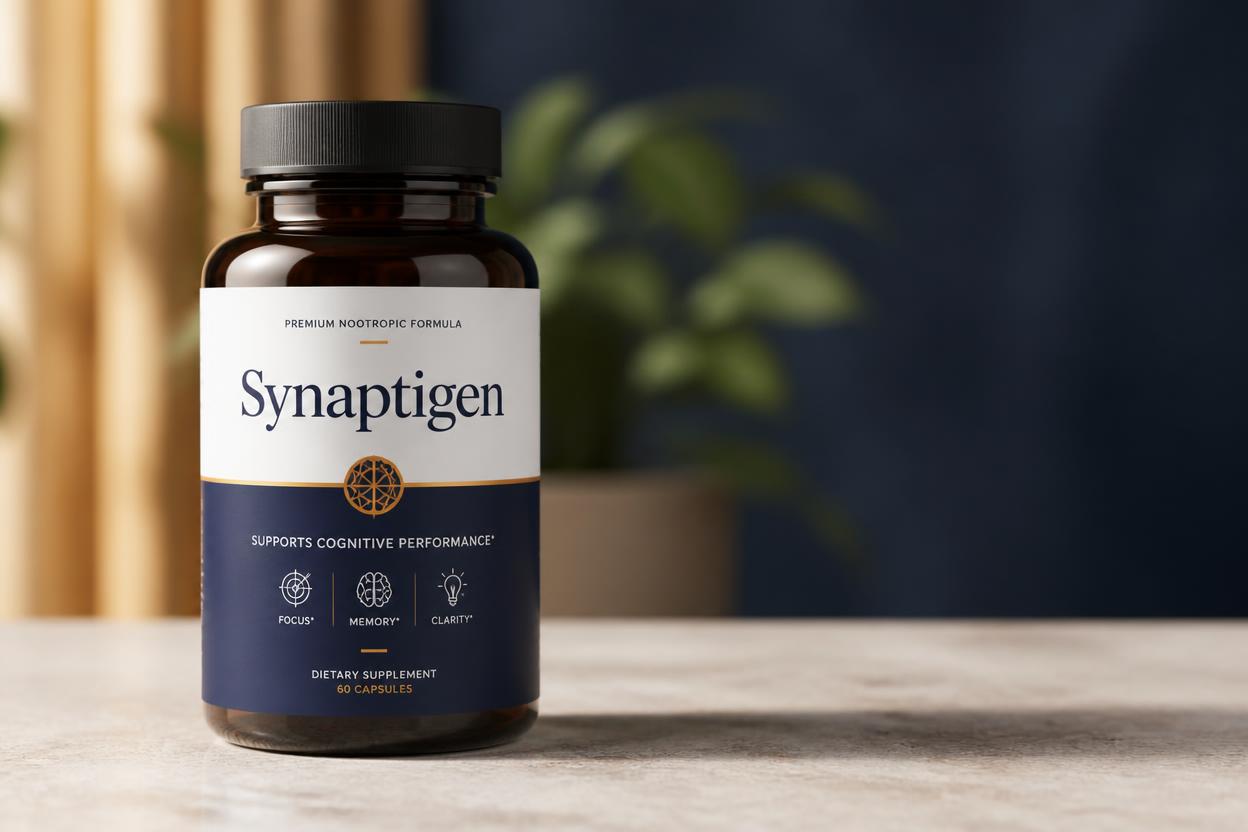
- Citicoline: 250 mg. The studied dose for attention and mental energy.
- L-tyrosine: 300 mg. Amino acid with data on attention under stress. Dose sits below the military-study range.
- Bacopa monnieri: 150 mg. Below the memory-study dose. Bonus, not main claim.
- Safety note: avoid if you take MAO inhibitors or thyroid medication without asking your doctor.
What is in the bottle
Citicoline, 250 mg. The core of the formula. This is the dose human studies used for attention and mental energy. Most focus supplements either skip citicoline or cut the dose in half. This one does neither. Citicoline supports phospholipid synthesis in cell membranes. That matters for signal speed between neurons.
L-tyrosine, 300 mg. An amino acid with data on attention under stress. Military and aviation trials used much higher doses (100–150 mg/kg, or roughly 7–10 grams for a 70 kg adult). The 300 mg here is below that range. It may still support focus for some users, but the evidence at this dose is thinner. It is a sensible partner for citicoline, not a standalone solution.
Bacopa monnieri, 150 mg. Here is the limitation. Bacopa supports long-term memory at 300 mg and up. At 150 mg it is half the studied dose. Fine as a bonus. Not enough if memory is your main goal. See our bacopa monnieri guide for the full dose discussion.
No caffeine, no proprietary blend. Every dose is printed on the label. Nothing hides behind a fancy name. That is rarer than it should be in this aisle. You can take it with your morning coffee without doubling stimulants.
What the research says
Citicoline at 250 mg is the low end of studied doses for attention. The mechanism is phospholipid support in cell membranes. L-tyrosine at 300 mg is below the military-study range where cognitive benefits were measured. Bacopa at 150 mg is below the 300 mg threshold where memory trials showed benefit. That is the honest trade-off of this formula.
The citicoline data is the strongest claim Synaptigen can make. A 2021 trial on older adults with AAMI (age 50–85) found 500 mg daily improved memory over 12 weeks. Synaptigen uses 250 mg, the lower studied range. The effect is not a caffeine kick. It builds as cell membrane composition shifts. That takes time.
L-tyrosine has military and aviation data at high doses (100–150 mg/kg). Pilots and soldiers performed better on cognitive tasks after those doses under sleep deprivation and cold exposure. Synaptigen contains 300 mg, far below the studied range. That is stress-related focus, not everyday calm concentration. If your job is high-pressure, this ingredient fits in theory. At 300 mg, the benefit may be subtle.
Bacopa monnieri at 150 mg is the weak link for memory. A 2001 trial found 300 mg improved delayed word recall scores over 12 weeks. At half that dose, the effect is speculative. Synaptigen positions bacopa as a bonus, not a main claim. That is honest labeling. If memory is your main problem, this bottle is not the best fit. See our best memory supplements comparison for alternatives.
Dosage and how to take it
One capsule daily is the stated dose. That is half the dose used in the AAMI trial. Four weeks is the minimum test window. Eight weeks is better. The active compounds in citicoline and bacopa build slowly. Do not judge at day three. L-tyrosine may show subtle changes earlier, but citicoline is the core ingredient with the strongest data.
Take it with food if you notice nausea. Citicoline can cause mild stomach upset on an empty stomach. L-tyrosine absorbs better away from high-protein meals. If you eat a protein-heavy breakfast, take the capsule mid-morning instead.
Do not split the capsule. The doses are already at the lower end of the studied range. Dividing them further drops you below the threshold where trials showed benefit. If one capsule feels too strong, try taking it every other day for the first week.
Side effects and safety
Most side effects are mild and temporary. Headache, nausea, dry mouth, occasional fatigue. The real risks are interactions with MAO inhibitors and thyroid medication. Citicoline is a cholinergic. It can cause insomnia if taken late in the day. L-tyrosine affects dopamine and norepinephrine. It can interact with MAO inhibitors and thyroid drugs.
Citicoline: headache is the most common complaint. It usually fades after one week. Take it in the morning. Evening doses can keep you awake. If you take anticholinergic medication, talk to your doctor. The mechanisms oppose each other.
L-tyrosine: avoid if you take MAO inhibitors (some antidepressants). The combination can raise blood pressure to dangerous levels. If you take thyroid medication, check levels after four weeks. L-tyrosine is a thyroid hormone precursor. It can shift your numbers.
Bacopa monnieri at 150 mg is generally well tolerated. It can slow the heart rate slightly. Animal studies suggest it can increase thyroid hormone activity. If you take thyroid medication, monitor levels. Pregnant or breastfeeding women should avoid bacopa. The safety data is insufficient.
Who should skip it
Skip Synaptigen if you take MAO inhibitors or thyroid medication without medical clearance. Skip it if your main problem is memory, not focus. The bacopa dose is too low for memory. Skip it if you expect results in days. Real ingredients need weeks. Skip it if you run on five hours of sleep. No capsule fixes sleep debt.
Buy it if your main problem is attention: scattered focus, mental fatigue by midday, work that demands long concentration. Give it four to eight weeks of daily use before you judge. It is not a stimulant. The effect is gradual.
Skip it if your main problem is memory. The bacopa dose here is not built for that. Our memory comparison points to the right bottles instead. Skip it too if you run on five hours of sleep. No capsule fixes that first.
Synaptigen vs Qualia Mind
Qualia Mind covers more ground. It adds phosphatidylserine, alpha-GPC and several B vitamins to a long formula. Synaptigen covers less but keeps the formula simple and the capsule count at one. Your tolerance for complexity decides. Both need four to eight weeks to judge fairly.
Qualia Mind runs seven capsules a day. Synaptigen runs one. That matters if you already take daily medications and do not want a second pill organizer. The price per day of Synaptigen is lower, but that is not the deciding factor. The deciding factor is whether you need the fuller formula or the simpler one.
Neither bottle replaces sleep, diet or movement. Both require a doctor check if you take daily medications. Both need time. See our best nootropics for focus comparison for the full breakdown of five options.
Frequently Asked Questions
How fast does Synaptigen work?
It contains no caffeine, so there is no same-hour kick. Some users report cleaner attention in week two to four. That slower curve is what a real formula looks like. Judge at week four, not day four.
Can I take Synaptigen with my morning coffee?
Yes. The formula is caffeine-free. You are not doubling stimulants. Your coffee habit stays untouched. Take Synaptigen in the morning with or after breakfast.
Who should not take Synaptigen?
Anyone on MAO inhibitors or thyroid medication without medical clearance. Anyone whose main problem is memory, not focus. Anyone who wants results in under two weeks. Anyone running on five hours of sleep.
Is Synaptigen safe for seniors?
For most healthy seniors, yes. The citicoline dose is well studied in adults over 50. Seniors on multiple medications should check with a doctor before starting. Bring the full label.
Does Synaptigen contain caffeine or stimulants?
No. The formula is stimulant-free. Citicoline, L-tyrosine and bacopa are not stimulants. You can take it in the morning or afternoon without affecting sleep.
What if Synaptigen does nothing for me?
Judge it at week four. If nothing changed by week six, stop. Most legitimate supplements need four to eight weeks. If you still feel nothing after eight weeks, the formula is not a match for your biology. Try a different mechanism.
Sources and References
- Alvarez XA, et al. “Citicoline improves memory performance in elderly subjects.” Methods and Findings in Experimental and Clinical Pharmacology. 1997. PubMed
- “Citicoline.” Examine.com. Human Effect Matrix. examine.com
- Magill RA, et al. “Effects of tyrosine, phentermine, caffeine D-amphetamine, and placebo on cognitive and motor performance.” Aviation, Space, and Environmental Medicine. 2003. PubMed
- “L-Tyrosine.” Examine.com. Human Effect Matrix. examine.com
- Stough C, et al. “The chronic effects of an extract of Bacopa monnieri on cognitive function in healthy human subjects.” Psychopharmacology. 2001. PubMed
RecallPath does not sell supplements. We publish facts for readers over 40.
Questions? [email protected]
- Ingredients and doses — citicoline, L-tyrosine and bacopa at printed amounts. What the 250 mg dose covers and where it falls short.
- Scam check — complaints, refund policy and what actually holds up.