
Women over 50 face a unique set of memory challenges. Estrogen decline during menopause affects the hippocampus. B12 deficiency becomes common. Thyroid disease is 4 to 10 times more likely than in men. Before buying any supplement, rule out the medical causes. Then match each ingredient to the published evidence.
Written and fact-checked by RecallPath Editorial Team. Last updated: . About our editorial process.
- Estrogen and the hippocampus: The brain region responsible for memory formation has abundant estrogen receptors. Declining estrogen during menopause slows memory consolidation.
- B12 deficiency: Affects 20 in 100 adults over 60. Half of deficient patients report word-finding problems. A blood test fixes the diagnosis.
- Thyroid: Hashimoto’s disease is 4 to 10 times more common in women. Hypothyroidism slows neurotransmitter activity and weakens memory consolidation.
- Evidence-backed supplements: Citicoline, bacopa monnieri and phosphatidylserine have peer-reviewed RCTs in aging populations. Soy isoflavones show mixed evidence.
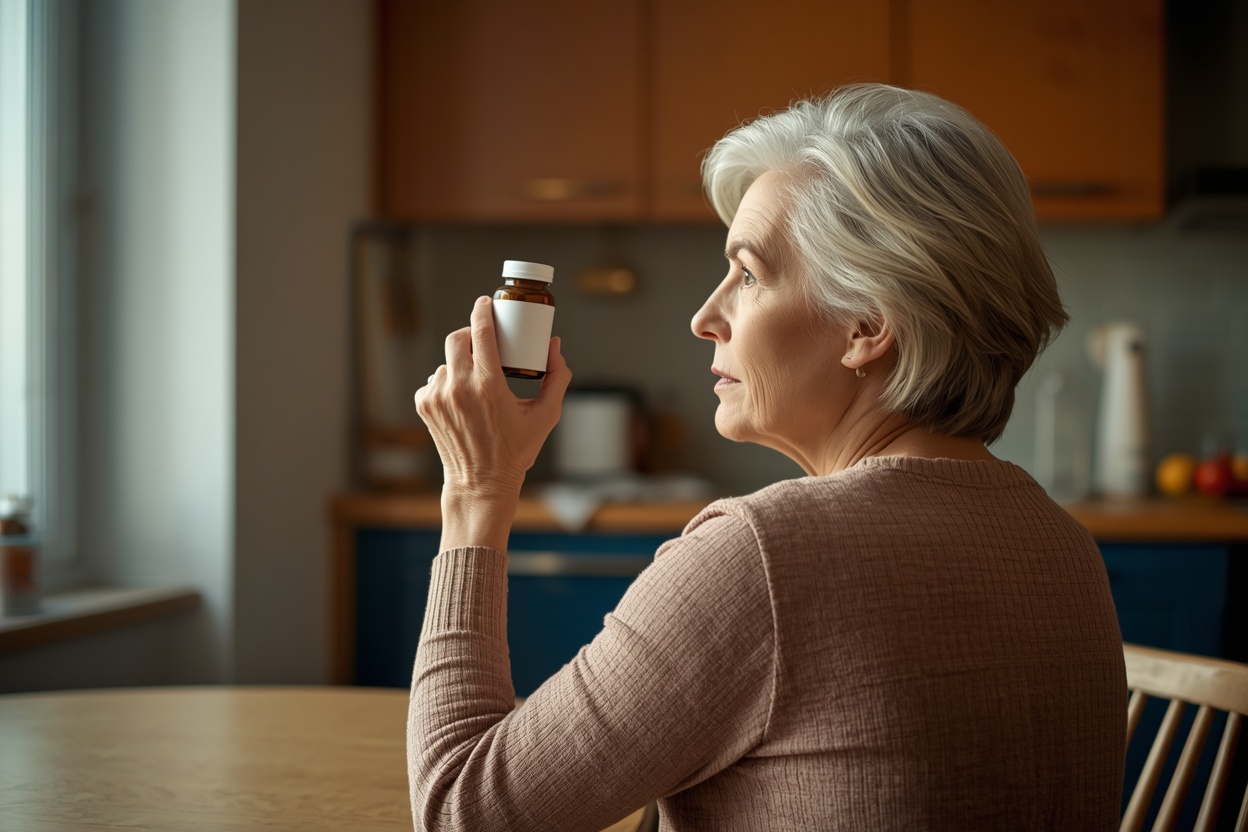
Why memory changes after 50 — and why women feel it first
Memory decline is not identical between men and women. Three factors hit women harder after 50.
Estrogen and the hippocampus. The hippocampus, the brain region that forms and retrieves memories, has abundant estrogen receptors. When estrogen levels drop during perimenopause and menopause, these processes slow. A 2024 Tulane University study found that short-term estrogen exposure in middle age may alter neuroestrogen production, potentially maintaining higher levels throughout aging. Large studies show that cognitive difficulties during perimenopause tend to recede after menopause, but the transition can last years. See the menopause brain fog guide for the mechanism and what helps.
B12 deficiency. B12 absorption declines with age. Around 20 in 100 adults over 60 are deficient. A PMC case report found that 50% of B12-deficient patients report nominal aphasia, or word-finding difficulty. Women are not uniquely affected, but the overlap with menopause symptoms means the deficiency is often missed.
Thyroid disease. Hashimoto’s disease is 4 to 10 times more common in women than men, according to the NIDDK. It often develops between ages 30 and 50. Hypothyroidism slows neurotransmitter activity and cerebral blood flow. Word-finding difficulty is a documented symptom. A TSH blood test identifies it. Treatment with levothyroxine typically restores cognitive function within months.
Get these checked first
- B12 blood test. Rules out the most common reversible cause of memory problems in women over 60.
- TSH and free T4. Screens for hypothyroidism and Hashimoto’s disease.
- Vitamin D. Low levels correlate with faster cognitive decline. Deficiency is common even in sunny climates.
- Sleep study. Sleep apnea is underdiagnosed in women and mimics brain fog.
- Medication review. Anticholinergics, some sleep aids and metformin can impair memory.
The supplements with human data
These ingredients have at least one peer-reviewed RCT in an aging population. None reverse dementia. They add support when the basics are in place.
Vitamin B12
B12 is not a nootropic. It is a deficiency corrector. If your level is low, supplementation often restores clarity within weeks. If your level is normal, extra B12 does not improve memory. The daily requirement for adults is 2.4 mcg. Women over 60 and those taking metformin are at higher risk of deficiency. A blood test should guide dosing, not marketing.
Citicoline
Citicoline is a choline source that crosses the blood-brain barrier efficiently. A 2022 real-world study (PMC12942905) followed adults with early cognitive impairment taking citicoline for 6 to 9 months. The citicoline group showed significant positive changes in semantic and episodic fluency. These processes are directly involved in word retrieval. Nakazaki et al. (J Nutr, 2021, PMID 33978188) used 500 mg Cognizin in adults with age-associated memory impairment (n=100, ages 50-85) over 12 weeks. The citicoline group improved episodic memory on computerized tests.
Bacopa monnieri
Bacopa is an Ayurvedic herb with the strongest human data for memory among herbal nootropics. Calabrese et al. (J Altern Complement Med, 2008, PMID 18611150) randomized 54 adults aged 65 and older to 300 mg of standardized bacopa extract or placebo for 12 weeks. The bacopa group had enhanced delayed word recall on the Rey Auditory Verbal Learning Test. Stroop task performance also improved. No effects were seen at 5 weeks. The benefit required 12 weeks to emerge. Stough et al. (Psychopharmacology, 2001, PMID 11498727) used 300 mg of CDR08 extract in 46 adults over 12 weeks and found improved delayed word recall and reduced state anxiety.
Phosphatidylserine
Phosphatidylserine is a phospholipid that supports cell membrane fluidity in neurons. Kato-Kataoka et al. (J Clin Biochem Nutr, 2010, PMID 20492494) used 100 mg daily for six months in 78 elderly adults with memory complaints. The effect was limited to a subgroup with low baseline performance. The FDA allows a qualified health claim: “Very limited and preliminary scientific research suggests that phosphatidylserine may reduce the risk of cognitive dysfunction in the elderly. FDA concludes that there is little scientific evidence supporting this claim.”
Omega-3 fatty acids (DHA)
DHA makes up a significant portion of brain cell membranes. Low levels correlate with faster cognitive decline. A Neurology study of 2,183 adults found that higher omega-3 levels in red blood cells were associated with larger hippocampal volume and better abstract reasoning. For brain health specifically, DHA is the priority. Aim for at least 250 mg of DHA daily through fish or algae-based supplements.
Magnesium
Magnesium supports over 300 enzymatic reactions, including nerve signaling and sleep regulation. Most adults do not get enough from diet alone. Stress depletes stores further. Magnesium glycinate or threonate cross the blood-brain barrier most effectively. Taking 200 mg to 350 mg before bed improves sleep quality, which directly impacts next-day cognitive function.
Soy isoflavones
Soy isoflavones are phytoestrogens that bind selectively to estrogen receptor beta, which is highly expressed in the hippocampus and prefrontal cortex. A 2015 meta-analysis by Cheng et al. (Menopause, PMID 25003621) pooled 10 placebo-controlled RCTs with 1,024 participants. The overall effect on cognitive function was statistically significant but small (standardized mean difference 0.08). Visual memory showed a slightly larger effect (SMD 0.10). However, a large JAMA trial of 175 postmenopausal women found no significant cognitive difference after 12 months of soy protein with 99 mg isoflavones. The evidence is mixed. Soy isoflavones are not a replacement for hormone therapy and should not be used to treat cognitive symptoms alone.
What to look for on the label
Transparent doses with no proprietary blend. Bacopa monnieri at 300 mg with at least 55% bacosides. Citicoline at 250 mg or higher. Phosphatidylserine at 100 mg. Third-party testing seals from USP, NSF or ConsumerLab. No vinpocetine. No hidden stimulants. Match the dose to the published RCT, not the marketing claim.
Safety notes
Citicoline
Citicoline is a cholinergic. Some users report headache or difficulty sleeping, especially if taken late in the day. Take it in the morning. If headaches persist, stop and talk to your doctor.
Bacopa monnieri
Can cause gastrointestinal upset in some users. Take with food. The benefit requires 12 weeks. Do not judge results before week 8.
Phosphatidylserine
Has a theoretical bleeding risk. It can interact with warfarin, aspirin and other anticoagulants. The 100 mg dose is conservative, but the interaction still matters. Show the label to your doctor if you take any blood thinner.
Soy isoflavones
Avoid if you have a history of estrogen receptor-positive breast cancer unless your oncologist approves. Interactions with tamoxifen and aromatase inhibitors are possible. Talk to your doctor before starting.
Omega-3
High doses (above 3 g daily) can increase bleeding risk. If you take blood thinners, stay below 1 g of combined EPA and DHA daily unless your doctor advises otherwise.
Frequently Asked Questions
Do memory supplements work differently for women than men?
The ingredients work through the same mechanisms. But women over 50 face unique risk factors: estrogen decline, higher thyroid disease rates and B12 deficiency. These factors can amplify memory problems and make supplements less effective if the underlying issue is not treated.
Can supplements replace hormone therapy for memory?
No. Supplements do not replace estrogen. The North American Menopause Society advises against using hormone replacement therapy solely for cognitive symptoms. But supplements also do not replicate the hormonal effects of HRT. They are separate tools.
Should I take soy isoflavones for menopause brain fog?
The evidence is mixed. A 2015 meta-analysis of 10 RCTs found a small overall benefit on cognitive function, with a slightly larger effect on visual memory. But a large JAMA trial found no significant difference after 12 months. Soy isoflavones are not a treatment for cognitive symptoms. They may add modest support for some women.
How long before bacopa improves memory?
Published trials show benefits at 12 weeks, not earlier. Calabrese et al. (2008) found enhanced delayed word recall at 12 weeks in adults 65 and older. Stough et al. (2001) also found effects at 12 weeks. Judge bacopa at week 12, not week 2.
Is B12 enough to fix memory problems?
If you are deficient, yes. Correcting B12 deficiency often restores clarity within weeks. If your level is normal, extra B12 does not improve memory. A blood test should guide the decision, not a supplement label.
Can I take citicoline with thyroid medication?
Citicoline does not have a known direct interaction with levothyroxine. But citicoline is a cholinergic and can cause headache or insomnia in some users. If you take thyroid medication, your doctor already monitors your symptoms. Add one supplement at a time and note any changes.
What is the best supplement for menopause brain fog?
There is no single best supplement. Citicoline has the strongest evidence for verbal fluency. Bacopa monnieri has the strongest evidence for delayed word recall. But menopause brain fog often has multiple causes: estrogen decline, poor sleep, stress and B12 deficiency. Fix the medical issues first. Then add one supplement at a time.
When should I see a doctor about memory changes?
See a doctor if memory problems are frequent, worsening or paired with other changes: getting lost in familiar places, repeating questions, losing track of time, or sudden confusion with headache. Those are not supplement problems.
Sources and References
- Pernicious Anemia with Isolated Nominal Aphasia – PMC6277171
- Hashimoto’s Disease – NIDDK
- Scoping Review on Hashimoto’s Prevalence – PMC12015930
- Real-World Neuroprotective Effects of Oral Citicoline – PMC12942905
- Nakazaki et al. (2021) – Citicoline RCT, J Nutr, PMID 33978188
- Calabrese et al. (2008) – Bacopa in Elderly, J Altern Complement Med, PMID 18611150
- Stough et al. (2001) – Bacopa RCT, Psychopharmacology, PMID 11498727
- Kato-Kataoka et al. (2010) – Phosphatidylserine RCT, J Clin Biochem Nutr, PMID 20492494
- Cheng et al. (2015) – Soy Isoflavones Meta-Analysis, Menopause, PMID 25003621
- Vitamin B12 – NIH Office of Dietary Supplements
Need help choosing?
RecallPath does not sell supplements. We publish facts for readers over 40.
Email usThinking about supplements?
We compared the bottles that have real human data behind them: doses, prices, who each one fits. See the memory supplement breakdown