
Memo Pezil Ingredients: Label Breakdown & Doses
Memo Pezil lists five active ingredients on the label. No proprietary blend, no caffeine. This breakdown explains what each one does, how much is inside, what the research says about that dose, and where the formula falls short of the studied range. No marketing language. Just the label and the studies.
Written and fact-checked by RecallPath Editorial Team. Last updated: . About our editorial process.
- BCAAs 2:1:1: 540 mg. The largest ingredient by weight. Limited cognitive research in humans.
- Bacopa monnieri: 200 mg, standardized. Below the 300 to 450 mg range used in memory trials.
- Rhodiola rosea: 100 mg, 3% salidroside. Fatigue and stress support. Mild MAOI activity.
- L-Theanine: 100 mg. Well tolerated. Supports alpha wave activity.
- Panax ginseng: 90 mg. Mental energy. Documented drug interactions with blood thinners and antidepressants.
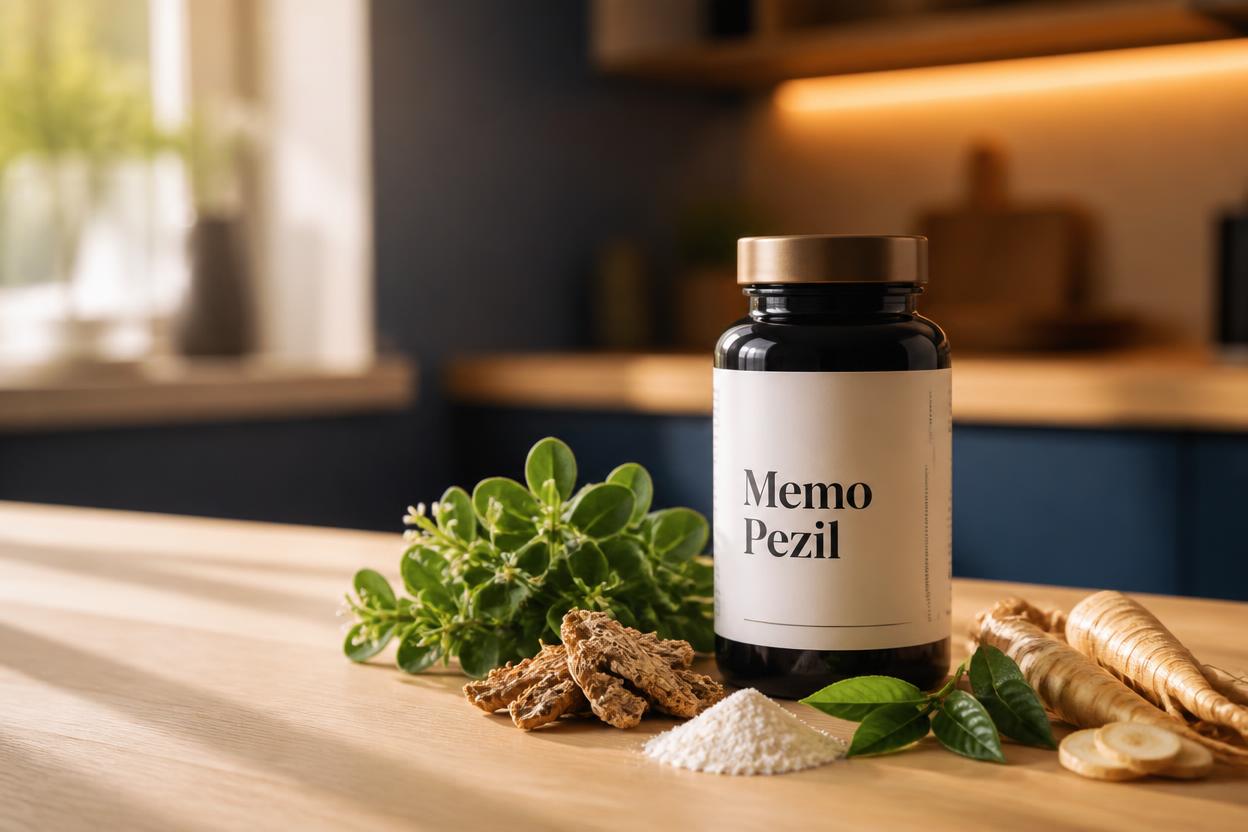
The five ingredients
Branched Chain Amino Acids 2:1:1
BCAAs are the largest ingredient by weight in Memo Pezil. They compete with aromatic amino acids — including tyrosine and tryptophan, the precursors to dopamine and serotonin — at the blood-brain barrier. This competitive dynamic makes the cognitive application of BCAAs more complex than straightforward support.
Published research specifically examining BCAAs in cognitive contexts is limited. The 540 mg dose is standard for exercise recovery but has no established cognitive benefit in peer-reviewed human trials. The NCCIH does not list BCAAs as a cognitive supplement.
Bacopa monnieri (standardized)
Bacopa is the ingredient with the strongest human data for memory among herbal nootropics. The active compounds are bacosides, which modulate choline acetyltransferase and support synaptic communication.
The 200 mg dose in Memo Pezil is below the 300 to 450 mg range used in most published memory trials. Stough et al. (Psychopharmacology, 2001, PMID 11498727) used 300 mg of CDR08 extract standardized for ≥55% bacosides over 12 weeks in adults and found improved delayed word recall. The 200 mg here is 33% below that dose. The NCCIH notes that evidence for bacopa in cognitive applications remains mixed and inconclusive.
Rhodiola rosea extract (3% salidroside)
Rhodiola is an adaptogen with human data on mental fatigue under stress. The active compound is salidroside, which modulates monoamine levels and supports HPA axis function.
The 100 mg dose in Memo Pezil is modest. Published trials on mental fatigue typically use 200 to 400 mg. The 3% salidroside standardization is lower than the 1% to 3% range commonly cited. Rhodiola has demonstrated mild monoamine oxidase inhibitory (MAOI) activity in some studies. This matters for anyone taking antidepressants.
L-Theanine
L-Theanine is an amino acid found in tea leaves. Human EEG research has found that it increases alpha wave activity, a state associated with relaxed alertness. The 100 mg dose in Memo Pezil matches the lower end of the studied range for cognitive effects.
Side effects are rare at this dose. Some users report mild drowsiness. Do not combine with other sedatives without medical advice.
Panax ginseng extract
Panax ginseng is the most interaction-heavy ingredient in this formula. Published literature identifies potential interactions with warfarin and other blood thinners, blood pressure medications, diabetes medications, and certain antidepressants.
The 90 mg dose is modest, but the interaction risk is not strictly dose-dependent. Ginseng can also cause insomnia, headache and digestive upset in sensitive users. The NCCIH notes that ginseng has been studied for cognitive function, but the evidence is limited and inconsistent.
Dose context. Memo Pezil provides 200 mg bacopa. Most published memory trials used 300 to 450 mg. The 200 mg dose is 33% below the lower end of that studied range. This reduces side-effect risk but may also limit cognitive benefit. The 100 mg rhodiola is at the low end of the studied range for fatigue. The 540 mg BCAAs have no established cognitive benefit in peer-reviewed human trials.
How the five work together
Bacopa modulates cholinergic memory circuits. Rhodiola supports stress response and mental energy. L-Theanine promotes relaxed alertness. Ginseng adds stimulant-free mental energy. BCAAs provide amino acid support but their cognitive mechanism is unclear.
The formula covers multiple pathways: memory, stress, attention, energy. The weakness is dose. Bacopa at 200 mg is below the studied range. Rhodiola at 100 mg is conservative. Ginseng at 90 mg is modest. The formula is broad but not deep. For users with mild concerns, that may be enough. For users with specific memory issues, a higher-dose bacopa product might fit better.
What is not in the bottle
Absence matters as much as presence. Here is what Memo Pezil leaves out:
- Citicoline or alpha-GPC. No choline source that crosses the blood-brain barrier efficiently. This is a gap for attention and memory encoding support.
- Phosphatidylserine. No phospholipid for membrane support. Common in 50-plus formulas.
- Proprietary blend. Every dose is printed. You know exactly how much of each ingredient you are taking.
- Caffeine. No hidden stimulant. No afternoon crash.
- Artificial dyes or flavors. The capsules are plain.
Who each ingredient helps most
BCAAs (540 mg): Best for active adults who exercise regularly. The cognitive benefit is theoretical and unsupported by peer-reviewed human trials.
Bacopa (200 mg): Best for people who want memory support and are willing to wait 8 to 12 weeks. The dose is below the studied range. Expect modest effects.
Rhodiola (100 mg): Best for people under stress who need mental fatigue support. The dose is conservative. Effects may be subtle.
L-Theanine (100 mg): Best for people who want calm focus without sedation. The dose is adequate for alpha wave support.
Panax Ginseng (90 mg): Best for people who need mental energy without caffeine. The dose is modest. Interactions are the main concern.
Safety notes
Panax ginseng warnings
Ginseng interacts with warfarin, aspirin and other blood thinners. It can affect blood pressure and blood glucose. Do not take Memo Pezil without medical clearance if you use anticoagulants, antihypertensives or diabetes medication.
Rhodiola warnings
Rhodiola has mild MAOI activity. Avoid it if you take antidepressants, particularly MAOIs or SSRIs. It also affects thyroid hormone levels. Avoid if you have thyroid conditions or take thyroid medication. Do not use during pregnancy or breastfeeding.
Bacopa warnings
Bacopa can cause mild GI upset in the first two weeks. Taking it with food helps. Avoid if you take thyroid medication. The NCCIH notes that evidence for cognitive benefit remains mixed.
The bottom line
Memo Pezil is a five-ingredient formula with transparent dosing. BCAAs dominate by weight but lack cognitive evidence. Bacopa at 200 mg is below the studied range. Rhodiola at 100 mg is conservative. L-Theanine at 100 mg is adequate. Ginseng at 90 mg adds energy but carries interaction risk.
The formula is broad but shallow. It covers memory, stress, attention and energy at modest doses. For users with mild concerns, that may be enough. For users who need targeted memory support, a higher-dose bacopa or citicoline product might fit better.
For the full safety profile, read our Memo Pezil side effects guide. For a comparison against competitors, go to Best Memory Supplements of 2026.
Frequently Asked Questions
What is in Memo Pezil?
Five ingredients: BCAAs 2:1:1 (540 mg), bacopa monnieri (200 mg), rhodiola rosea (100 mg), L-theanine (100 mg) and Panax ginseng (90 mg). No proprietary blend. No caffeine.
Is the bacopa in Memo Pezil standardized?
Yes. The label specifies a standardized extract. However, the 200 mg dose is below the 300 to 450 mg range used in most published memory trials. Standardization ensures consistency, but dose determines effect.
Why is the bacopa dose only 200 mg?
Most published memory trials used 300 to 450 mg. The 200 mg in Memo Pezil is 33% below that range. This keeps side effects low but may limit cognitive benefit. The NCCIH notes that evidence for bacopa remains mixed.
Does Memo Pezil contain citicoline?
No. Memo Pezil does not include citicoline, alpha-GPC or any choline source that crosses the blood-brain barrier efficiently. This is a gap compared to formulas like Harmo Brain, which includes 250 mg citicoline.
Does Memo Pezil contain caffeine?
No. The formula is stimulant-free. No caffeine, no guarana, no synephrine. The energy effect comes from ginseng and rhodiola, not stimulants.
Can I take Memo Pezil with antidepressants?
No. Rhodiola has mild MAOI activity. The theoretical risk with SSRIs and MAOIs is real. Ask your psychiatrist before combining. Do not self-medicate.
Is Memo Pezil safe for seniors?
For most healthy adults over 50, yes. If you take blood thinners, blood pressure medication, thyroid medication or diabetes drugs, avoid it or check with your doctor first. The interaction profile is real.
Does Memo Pezil have a money-back guarantee?
The seller offers a 60-day return window. Start your return before day 60. Keep your order confirmation. We found no public reports of denied refunds within the window.
Sources and References
Need help choosing?
RecallPath does not sell supplements. We publish facts for readers over 40.
Email us