
Knee Pain Location Chart: What Pain in Each Area Usually Means
Pain location narrows the list of possible causes. It never makes a diagnosis. That is the honest limit of any knee pain location chart. What location can do is help you describe your symptoms precisely, which is the first thing an orthopedist will ask about. After 50, the inner knee is the most common site of trouble, because the medial compartment carries the largest share of body weight (Hospital for Special Surgery). The back of the knee usually points to a fluid problem, such as a Baker’s cyst. This chart maps each zone to the conditions most often linked to it, then shows what location alone cannot tell you.
Written and fact-checked by RecallPath Editorial Team. Last updated: . About our editorial process.
- How to read it: location narrows causes, it never confirms one. Use the chart to describe symptoms to your doctor, not to replace the doctor.
- Most common zone after 50: the inner knee. The medial compartment carries the most load and wears first (Hospital for Special Surgery, 2024).
- Back of the knee: often a Baker’s cyst, fluid that builds up in response to an underlying problem such as arthritis or a meniscus tear (Cleveland Clinic, 2025).
- Age pattern: pain that builds over months suggests gradual wear. Sudden swelling after a twist suggests injury. Both need different responses.
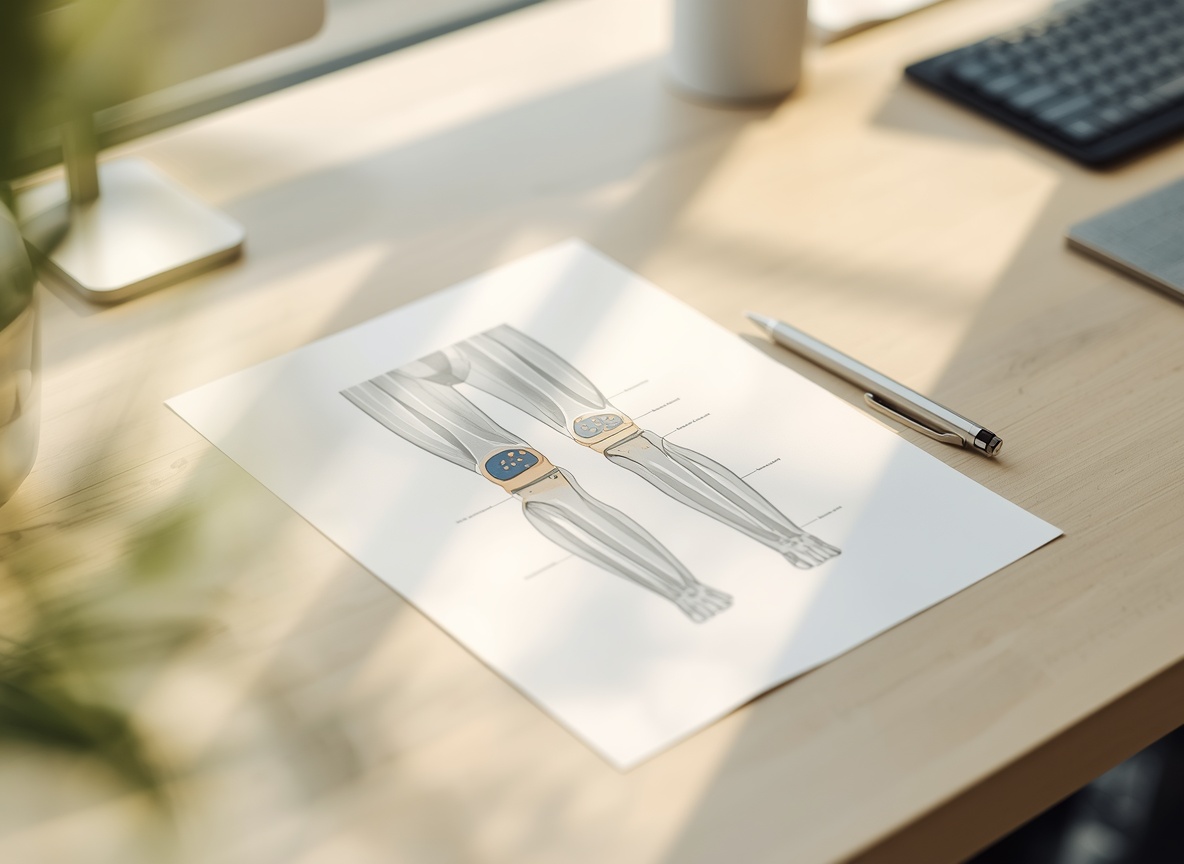
The chart
Each zone of the knee contains specific structures, and each structure fails in a predictable way. The chart below links the six common zones to the conditions most often associated with them, based on orthopedic reference sources. “Most often associated” is deliberate wording: the same spot can host several different problems.
| Zone | Structures there | Conditions most often linked | Typical pattern |
|---|---|---|---|
| Inner Medial side, along the joint line |
MCL ligament, medial meniscus, medial joint surface |
Medial osteoarthritis (most common), MCL sprain, medial meniscus tear, pes anserine bursitis |
Builds over months, worse with stairs and standing |
| Outer Lateral side |
Iliotibial band, lateral meniscus, LCL ligament |
IT band syndrome (overuse), lateral meniscus tear, lateral osteoarthritis |
Worse with running, cycling and downhill walking |
| Above kneecap Lower front thigh |
Quadriceps tendon, suprapatellar bursa |
Quadriceps tendonitis, suprapatellar bursitis |
Aching after stairs, jumping or squatting |
| Below kneecap Upper shin, front |
Patellar tendon, infrapatellar bursa |
Patellar tendonitis (jumper’s knee), infrapatellar bursitis |
Sharp with kneeling, jumping or repeated impact |
| On the kneecap Front center |
Prepatellar bursa, patellofemoral joint surface |
Prepatellar bursitis (housemaid’s knee), patellofemoral arthritis |
Swelling after kneeling; grinding on stairs |
| Back Posterior, the crease |
Hamstring tendons, popliteal space, PCL ligament |
Baker’s cyst, hamstring tendonitis, PCL injury |
Fullness or bulge; tightness when bending |
The six zones, zone by zone
Inner Pain on the inside of the knee
The inner knee is the most common site of knee osteoarthritis. The medial compartment carries the largest share of body weight, so its cartilage tends to wear first (Hospital for Special Surgery, 2024). Three other causes belong on the list: an MCL sprain, typically after a force to the outside of the knee; a medial meniscus tear, with clicking, catching or a sense of the knee giving way; and pes anserine bursitis, a tender spot two to three inches below the inner joint line that flares with climbing.
Outer Pain on the outside of the knee
The signature cause here is iliotibial band syndrome, an overuse irritation of the thick band running down the outer thigh. Runners and cyclists get it most. The lateral meniscus can tear with twisting, and lateral osteoarthritis occurs too, though less often than on the inner side. After 50, a new outer-knee ache that builds with walking is more likely wear than overuse.
Above Pain above the kneecap
The quadriceps tendon attaches here, and tendonitis shows up as aching after stairs, jumping or squatting. One warning sign is specific: in adults over 40, a sudden pop above the kneecap with an inability to fully straighten the leg suggests a quadriceps tendon tear, which needs same-day medical care. Do not wait that one out at home.
Below Pain below the kneecap
The patellar tendon connects the kneecap to the shinbone. Repetitive loading inflames it: patellar tendonitis, classically called jumper’s knee. The pain is sharp with kneeling, jumping and repeated impact. Infrapatellar bursitis sits in the same zone and produces a small, tender bump below the kneecap after prolonged kneeling.
Kneecap Pain on or behind the kneecap
Swelling directly on the front of the kneecap after kneeling points to prepatellar bursitis, also called housemaid’s knee. Deeper, behind the kneecap, patellofemoral arthritis produces a grinding ache on stairs, squatting and rising from a chair, plus stiffness after long sitting. This compartment is one of the three places osteoarthritis commonly starts.
Back Pain behind the knee
A Baker’s cyst is the classic finding: a fluid-filled bulge in the crease behind the knee. Per Cleveland Clinic, it often develops in response to an underlying problem inside the joint, such as arthritis or a meniscus tear, that produces excess fluid. Hamstring tendonitis causes aching that worsens with bending or sprinting. PCL injuries are rare after 50 and usually follow a hard blow to the front of a bent knee, such as a dashboard impact.
Where osteoarthritis shows up first
Osteoarthritis does not spread evenly across the knee. It favors three compartments. The medial compartment, the inner side, is the most common site by far, because it absorbs the largest share of load (Hospital for Special Surgery, 2024). The patellofemoral compartment, behind the kneecap, is the next frequent, announcing itself with stair and chair pain. The lateral compartment, outer side, is the least common and often appears in people with a knock-knee alignment or an old lateral meniscus injury.
The pattern of onset matters as much as the location. Osteoarthritis builds over months: stiffness under about 30 minutes in the morning, ache after activity, mild swelling by evening. An injury announces itself in minutes: pain at the moment of a twist, swelling within hours, clicking or locking. After 50, degenerative meniscus tears blur the line, because they can appear without any memorable injury and sit alongside arthritis on the same inner joint line.
What this chart cannot tell you
Three limits of location-based reading
Structures overlap. Several different problems can live in the same zone. Inner knee pain can be arthritis, a ligament sprain, a meniscus tear or bursitis. Location alone cannot separate them.
Pain refers. The knee can hurt because of the hip or the lower back. Referred pain lands in the knee without any knee structure being damaged at all.
Serious causes can hide anywhere. Infection, gout and inflammatory arthritis do not respect zones. They announce themselves through warmth, redness, fever or multiple joints, not through a map.
These are the signs that override the chart entirely:
- Sudden swelling, warmth or redness, especially with fever. Rule out infection and gout first.
- The knee locks, catches or gives way. That is a mechanical problem until proven otherwise.
- A pop followed by an inability to straighten the leg. Possible tendon tear. Same-day care.
- Night pain at rest or pain that persists without movement. Mechanical pain sleeps when you do. Rest pain does not.
- Symptoms in several joints at once. That pattern points toward systemic causes, not a local one.
Frequently Asked Questions
1What does pain on the inside of the knee mean?
Inner knee pain is most often linked to medial osteoarthritis, which is the most common compartment for knee wear because it carries the most load (Hospital for Special Surgery). Other frequent causes include MCL sprain, medial meniscus tear and pes anserine bursitis. Location narrows the list, but examination and possibly imaging separate them.
2What causes pain behind the knee?
The most recognizable cause is a Baker’s cyst, a fluid-filled bulge in the crease behind the knee. Per Cleveland Clinic, it often forms in response to an underlying joint problem such as arthritis or a meniscus tear. Hamstring tendonitis and PCL injuries are other causes. A swollen, warm back of the knee needs medical assessment, not a chart.
3Can a knee pain location chart diagnose my problem?
No. A chart narrows the list of possibilities by linking zones to commonly associated conditions. It cannot examine the joint, and several different problems can share one zone. A diagnosis requires a physical exam and, when indicated, imaging. Use the chart to describe your symptoms better, not to replace the exam.
4Which part of the knee gets arthritis first?
The inner compartment, called the medial compartment, is the most common site of knee osteoarthritis because it absorbs the largest share of body weight (Hospital for Special Surgery). The patellofemoral compartment behind the kneecap is the next most common, typically announcing itself with pain on stairs and after long sitting.
5Why does the front of my knee hurt when I climb stairs?
Stair climbing loads the patellofemoral joint behind the kneecap more than flat walking does. Front-of-knee pain on stairs, plus stiffness after sitting, is a classic pattern for patellofemoral arthritis. Tendon problems above or below the kneecap can produce similar pain. Persistent stair pain after 50 deserves an evaluation.
6Does knee pain location mean something different after 50?
Yes. Under 40, zone patterns skew toward overuse and sports injuries: IT band syndrome, tendonitis, ligament sprains. After 50, gradual wear dominates. Inner knee ache that builds over months is the typical osteoarthritis pattern, while sudden swelling after a twist suggests a degenerative meniscus tear. The map stays the same; the likely causes shift.
7When is knee pain a red flag regardless of location?
Sudden swelling with warmth or redness, especially with fever; a knee that locks or gives way; a pop followed by an inability to straighten the leg; pain at rest or at night; and symptoms in multiple joints. Any of these overrides the chart and warrants prompt medical assessment before any self-treatment.
Sources and References
Need help choosing?
RecallPath does not sell supplements. We publish facts for readers over 40.
Email us