
Congelum Review: Label, Doses and Who Should Skip It
Congelum is a four-ingredient joint formula that prints every dose on the label: glucosamine sulfate, chondroitin, MSM and boswellia. No proprietary blend, no hidden amounts, no miracle claims. That transparency is the single most important thing about it, because it lets you match the product against the actual research. The verdict: the core pair (glucosamine 1,500 mg plus chondroitin 1,200 mg) sits exactly on the studied doses, while the two supporting ingredients add early-stage evidence. This review breaks down each line of the label, who the formula fits, and who should skip it.
Written and fact-checked by RecallPath Editorial Team. Last updated: . About our editorial process.
- Glucosamine sulfate: 1,500 mg. The exact dose from the trial literature, in the sulfate form with the stronger evidence record.
- Chondroitin sulfate: 1,200 mg. Matches the studied dose. Pairs with glucosamine rather than replacing it.
- MSM: 1,000 mg. Early-stage evidence, honestly dosed.
- Boswellia serrata: 100 mg, standardized. Small positive trials for knee pain. The weakest evidence line in the formula, and the label does not pretend otherwise.
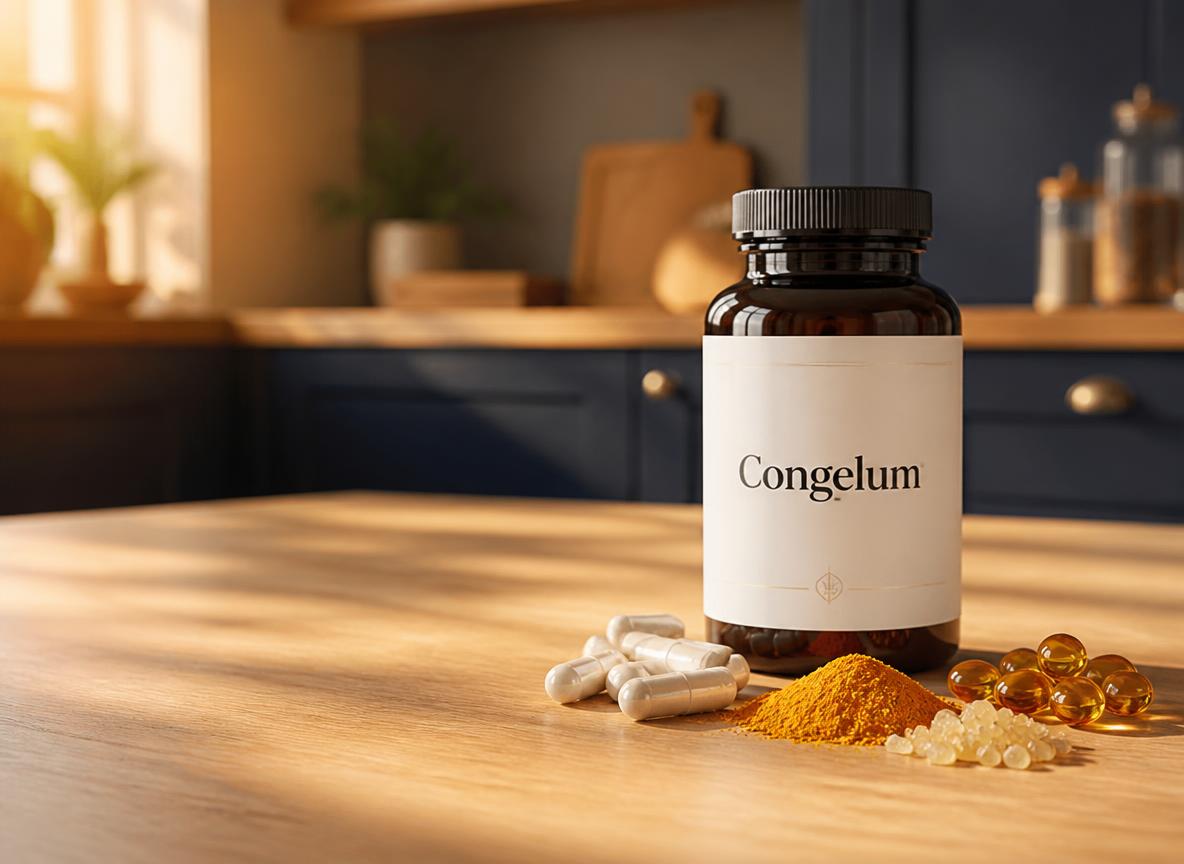
Congelum passes the two tests that matter most for a joint supplement: studied doses on the core pair, and full label transparency. The evidence caveat applies to the formula, not the product: glucosamine chondroitin helps some people with moderate knee pain, and no supplement regrows cartilage.
If you want a product where every milligram is printed and the core doses match the trials, Congelum qualifies. If you take warfarin or have a serious shellfish allergy, stop reading here and see the safety notes first.
The label, line by line
Every amount printed per daily serving. The sulfate form matters: the positive trial record belongs to glucosamine sulfate, not hydrochloride.
What each ingredient does at this dose
1,500 mg Glucosamine sulfate
An amino sugar that serves as a building block for cartilage molecules and joint fluid. The dose matches the standard across the trial literature. The GAIT trial (n=1,583) found no average benefit over placebo, but the combination clearly helped people with moderate-to-severe knee pain, and a 2025 trial (n=605) found it slowed cartilage loss by half over two years. Full evidence breakdown in our glucosamine chondroitin guide.
1,200 mg Chondroitin sulfate
A structural component of cartilage itself. The 1,200 mg dose matches the studied regimen, and a 2025 systematic review of 146 studies found the combination outperformed either ingredient alone. Chondroitin carries the cleaner pain data of the pair.
1,000 mg MSM
A sulfur compound found in small amounts in food. MSM has early-stage human data for knee osteoarthritis pain at doses between 1,500 and 3,000 mg. The 1,000 mg here is below that studied range, so treat it as a supporting player, not a driver. It is well tolerated, with occasional mild stomach upset reported.
100 mg Boswellia serrata
An Ayurvedic resin extract standardized for boswellic acids. Small randomized trials show knee-pain reductions with boswellia extracts, which is encouraging but early-stage evidence. At 100 mg, Congelum’s dose sits within the range used in the small trials. The weakest line of the formula, dosed honestly.
How the four hang together
The core pair supplies the building blocks: glucosamine for cartilage matrix, chondroitin for compression resistance. MSM and boswellia address the inflammatory and discomfort side of the equation. It is a coherent stack: two ingredients with real trial data at full doses, two with early data at honest doses. Nothing at a dust dose, nothing hidden.
The formula is designed for the person with moderate knee pain who has already committed to the foundations (exercise, weight, braces) and wants a transparent supplement layer on top. It is not designed for instant relief, and the label does not claim otherwise.
Who Congelum fits, and who should skip it
Good fit
Adults 50+ with moderate knee pain who will judge it at 8-12 weeks with a pain diary. People who want printed doses, the sulfate form, and no proprietary blend. Anyone already doing the exercise and weight work, adding a supplement layer on top.
Skip it
Warfarin users: documented INR interaction with case numbers. Serious shellfish allergy: choose a fermentation-derived glucosamine instead. Mild pain: the evidence concentrates in moderate-to-severe cases. Anyone expecting results in two weeks.
The complaints, honestly
- Shipping runs five to eight days. Slower than big retail, no way around it.
- No quick kick. The formula has no stimulant and no painkiller masking effect; week one feels quiet.
- Four capsules a day at full dose. Not a deal-breaker, but worth knowing before you commit.
None of these change the verdict. All of them are worth knowing before you decide.
The bottom line
Congelum does what a joint supplement should do and almost none of what the worst ones do: full label transparency, studied doses on the evidence-backed pair, honest positioning of the weaker ingredients, and no cartilage-regrowth mythology. It will not work for everyone, because glucosamine chondroitin does not work for everyone. But if you match the profile (moderate knee pain, warfarin-free, shellfish-safe, patient), it is a defensible choice in a category full of indefensible ones. See the glucosamine side effects guide for the full safety picture, including the warfarin case numbers.
Frequently Asked Questions
How long does Congelum take to work?
Eight to twelve weeks at the full daily dose before judging. The GAIT trial measured its primary outcome at 24 weeks, and structural effects, where they occur, take one to three years. Keep a pain diary from day one so the verdict is honest, not hopeful.
Can I take Congelum with warfarin?
No, not without your doctor. The glucosamine-warfarin interaction is documented with case numbers: a published report shows INR rising from 2.3 to 3.9 in three weeks, then to 4.7 (Knudsen et al., 2008). If you take warfarin, this conversation with your doctor, with INR monitoring, is not optional.
Is Congelum safe with a shellfish allergy?
Congelum uses shellfish-derived glucosamine. Controlled data is reassuring: 15 confirmed shellfish-allergic volunteers tolerated 1,500 mg of shrimp-derived glucosamine in a challenge study (Villacis et al., 2006), because the allergen lives in the flesh, not the shell. Major clinics still advise caution. If your allergy is severe, choose a fermentation-derived glucosamine product instead.
What is the difference between Congelum and plain glucosamine chondroitin?
The core pair is the same at the same doses. Congelum adds MSM at 1,000 mg and boswellia at 100 mg, both early-stage evidence ingredients. If you want the simplest possible formula, plain glucosamine sulfate plus chondroitin covers the best-supported ground. If you want the anti-inflammatory extras, Congelum supplies them at honest doses.
Does Congelum regrow cartilage?
No, and neither does anything else. The 2025 LEGS trial found the glucosamine-chondroitin combination slowed cartilage loss to about half of placebo over two years. That is slowing loss, not rebuilding. Any product claiming regrowth is claiming something no human trial has shown.
Is Congelum safe for seniors?
For most healthy seniors, yes. The doses sit within studied ranges, and the ingredient safety record across decades of use is mild. The exceptions that matter: warfarin users, severe shellfish allergy, chronic liver disease, and uncontrolled asthma. If any of those apply, clear it with your doctor first and bring the label.
How does Congelum compare to other joint formulas?
On transparency, it sits in the top tier: every dose printed, no proprietary blend, sulfate form. On evidence, its ceiling is the evidence ceiling of its core pair. Our evidence-ranked overview of the category, with what to skip, is in the best joint supplements guide.
Sources and References
- Clegg et al. – GAIT trial – NEJM, 2006
- Baden et al. – Glucosamine and/or Chondroitin in Humans – Nutrients, 2025
- Knudsen et al. – Glucosamine-warfarin interaction – Ann Pharmacother, 2008 (PMID 18363538)
- Villacis et al. – Glucosamine tolerance in shellfish allergy – J Allergy Clin Immunol, 2006 (PMID 17083356)
- Glucosamine – Mayo Clinic
Need help choosing?
RecallPath does not sell supplements. We publish facts for readers over 40.
Email us- Glucosamine Chondroitin Guide – every trial, every dose, the sulfate-vs-HCl question and the honest verdict
- Glucosamine Side Effects – the warfarin case numbers, shellfish allergy data and who should skip it
- Best Joint Supplements After 50 – the full category ranked by evidence, with what to avoid entirely
- Joint Pain After 50 – the cause patterns doctors sort by, and what works before any supplement