
Brain Fog Supplements: What Is Worth Trying
Fog has causes: sleep debt, stress, blood sugar swings, low B12 and poor thyroid function. A supplement works only when it matches the actual cause. Taking citicoline for a B12 deficiency fixes nothing. Here is the honest shortlist, ingredient by ingredient, with the cause each one targets.
Written and fact-checked by RecallPath Editorial Team. Last updated: . About our editorial process.
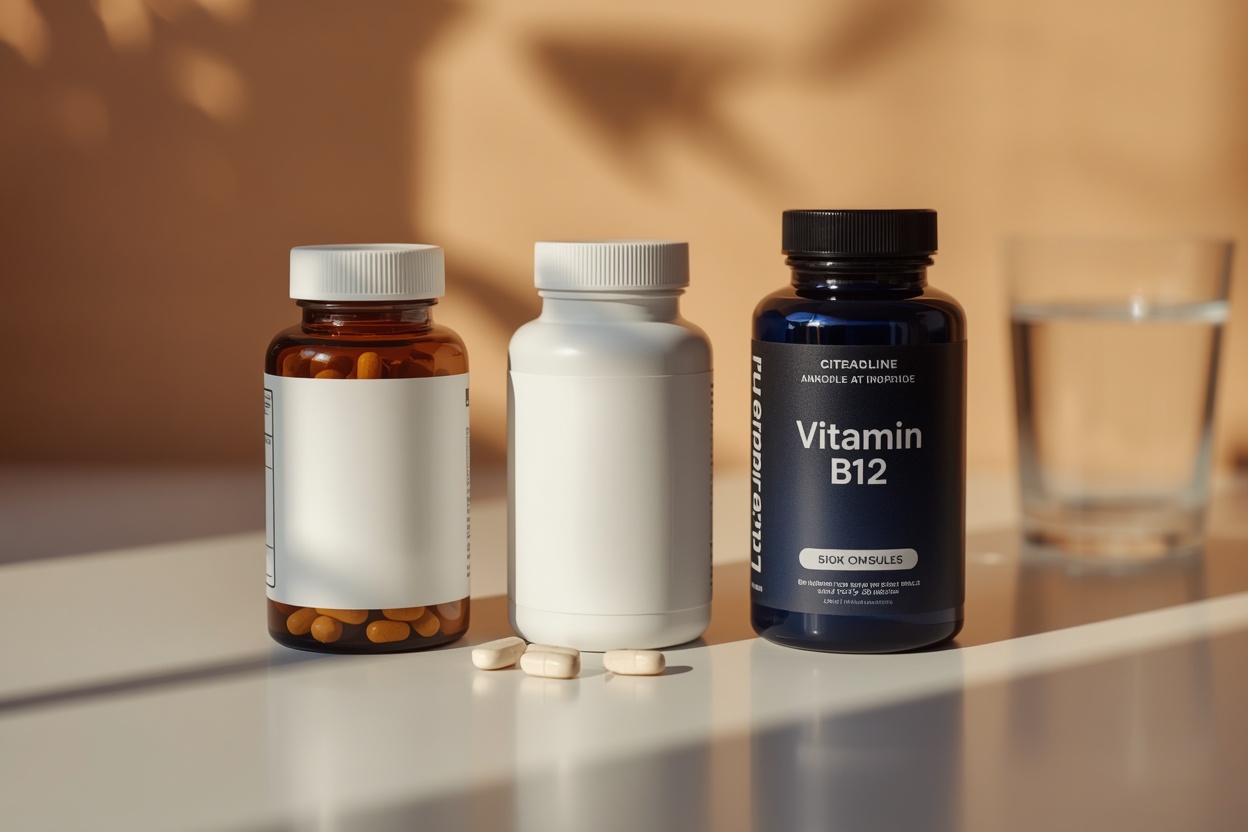
- Citicoline: 250 mg. Supports mental energy and attention. Several weeks to judge.
- Vitamin B12: deficiency fix, not nootropic. Test first. About 1 in 7 adults over 60 runs low.
- Omega-3 DHA: structural brain fat. Food first, capsule second. Two fish dinners a week cover it.
- L-theanine: 200 mg with coffee. Steadier attention, no long-term memory effect.
The shortlist, ingredient by ingredient
Citicoline · for mental energy and attention
Why it fits. Fog often feels like a brain that runs at half power. Citicoline supports mental energy and attention at 250 mg a day. For adults 50 to 85, 500 mg improved memory in a 2021 trial.
What to expect. Clearer attention builds steadily over several weeks of daily use. No buzz, no crash. The mechanism is phospholipid support in cell membranes. That matters for signal speed between neurons.
How to take it. One capsule in the morning with food. Evening doses can cause insomnia. Do not split the capsule. The 250 mg dose is already at the lower end of the studied range.
Vitamin B12 · if your fog comes with age and memory slips
Why it fits. Low B12 produces exactly this picture: fog, slow recall, low energy. Absorption drops after 60, and about 1 in 7 older adults runs low. The blood test is cheap and decisive.
What to expect. Only works if you are actually deficient. Ask for the blood test first. If you are low, correction shows within four to eight weeks. Extra B12 beyond deficiency does not boost memory further.
How to take it. 1,000 mcg daily if deficient. Methylcobalamin or cyanocobalamin both work. Sublingual forms bypass the stomach. That helps if acid levels are low after 60.
Omega-3 DHA · food first, capsule second
Why it fits. DHA is structural brain fat. The brain is 60 percent fat, and DHA makes up a large share. Studies show the clearest benefit in people who eat little fish.
What to expect. Slow and structural, not a same-week change. Two fish dinners a week cover it for most people. If you eat no fish at all, 1,000 mg DHA daily is the studied range.
How to take it. Look for triglyceride form, not ethyl ester. Triglycerides absorb better. Check for third-party testing. USP or NSF seals matter. Higher doses increase bleeding risk. Tell your doctor if you take blood thinners.
L-theanine · for the coffee drinkers
Why it fits. Paired with your morning coffee, 200 mg of L-theanine smooths caffeine into steadier attention. Decent human data, simple molecule. The mechanism is GABA modulation without sedation.
What to expect. A calmer, less jittery morning. It wears off by afternoon and does nothing long-term. This is a tool for hard mornings, not a system for chronic fog.
How to take it. 200 mg with your first cup of coffee. Any single-ingredient capsule works. Skip branded blends that hide the same molecule behind marketing.
What to skip
The supplement aisle is full of products that sound scientific and do nothing. Three categories stand out as the biggest waste of money for brain fog: detox cleanses, stimulant blends and megadose multivitamins. Recognize them, understand why they fail, and walk past without opening your wallet.
Detox and cleanse products. Your liver handles detox around the clock. A $60 cleanse bottle adds nothing but expense. There is no toxin buildup that a capsule can fix. If your liver is healthy, it works. If it is not, see a doctor.
Stimulant blends. Caffeine, guarana and synephrine in one capsule. They mask fog for three hours and deepen it by evening. The crash is real. Check the label before anything else. If the first ingredient is caffeine, you are buying expensive coffee.
Megadose multivitamins. Fog is rarely a multivitamin problem. Twenty ingredients at dust doses fix nothing and cost real money. Three to five ingredients at full study doses beat a crowded label every time.
Give it an honest window
Sleep and food fixes show in two to three weeks. Correcting a B12 deficiency takes four to eight. Citicoline builds steadily over several weeks. Judge any bottle only after its honest window, and change one thing at a time so you know what worked.
If the fog appeared suddenly, keeps getting worse, or comes with headaches and mood changes, skip the supplement aisle entirely. That is a doctor visit, and the sooner the better. Sudden cognitive decline is not a supplement problem.
Start with sleep. Seven to eight hours. Then food. Stable blood sugar, two fish dinners a week. Then the cheap tests: B12, thyroid, blood sugar. Only after that does supplementation make sense. Supplements work on top of the fundamentals. Never instead of them.
Frequently Asked Questions
Is brain fog reversible?
In most cases, yes. Sleep debt, stress, diet and low B12 all respond to treatment. The fix is boring but reliable. Persistent fog with other symptoms deserves a doctor visit.
Can I combine citicoline with B12?
They work on different pathways and are commonly taken together. Still, show both labels to your doctor if you take daily medication. Interactions are rare but real.
Why not just drink more coffee?
Caffeine borrows energy from later in the day. It masks fog for hours, then returns it with interest. That is the whole reason we test bottles for hidden caffeine. Fix the cause, not the symptom.
How long until a brain fog supplement works?
Several weeks for citicoline. Four to eight for B12 correction. Omega-3 is structural and takes months. Anyone promising same-day results is selling caffeine or marketing.
Should I get a B12 test before trying anything?
Yes. About 1 in 7 adults over 60 runs low. The symptoms mimic brain fog. A B12 test costs less than most bottles. Fix the deficiency first. Do not guess.
What if supplements do nothing for my fog?
Stop and see a doctor. Persistent fog with headaches, mood changes or memory loss is not a supplement problem. Sudden onset fog needs medical evaluation, not another bottle.
Sources and References
- Alvarez XA, et al. “Citicoline improves memory performance in elderly subjects.” Methods and Findings in Experimental and Clinical Pharmacology. 1997. PubMed
- “Vitamin B12 Fact Sheet for Health Professionals.” NIH Office of Dietary Supplements. Updated 2024. ods.od.nih.gov
- “Omega-3 Fatty Acids Fact Sheet for Health Professionals.” NIH Office of Dietary Supplements. Updated 2024. ods.od.nih.gov
- “L-Theanine.” Examine.com. Human Effect Matrix. examine.com
- “Citicoline.” Examine.com. Human Effect Matrix. examine.com
RecallPath does not sell supplements. We publish facts for readers over 40.
Questions? [email protected]