
Lion’s Mane Mushroom: What the 16-Week MCI Trial Actually Found
RecallPath Editorial Team reviewed 5 published human trials on Lion’s Mane mushroom. A 2009 RCT found that 3 g daily improved cognitive scores in adults with mild cognitive impairment over 16 weeks. The benefits faded within 4 weeks of stopping.
Written and fact-checked by RecallPath Editorial Team. Last updated: . About our editorial process.
- Studied dose: 3 g daily of dry fruiting body powder for 16 weeks. A 2023 trial used 1.8 g daily for 28 days in healthy young adults.
- Key finding: Improved HDS-R scores in MCI adults at weeks 8, 12 and 16. Scores dropped back after cessation.
- Young adult data: Mixed. One trial found faster Stroop performance at 60 minutes. Another found improved pegboard dexterity but worse executive function.
- Safety: Avoid if you have mushroom allergies or asthma. Itchy skin and digestive upset are the most common side effects.
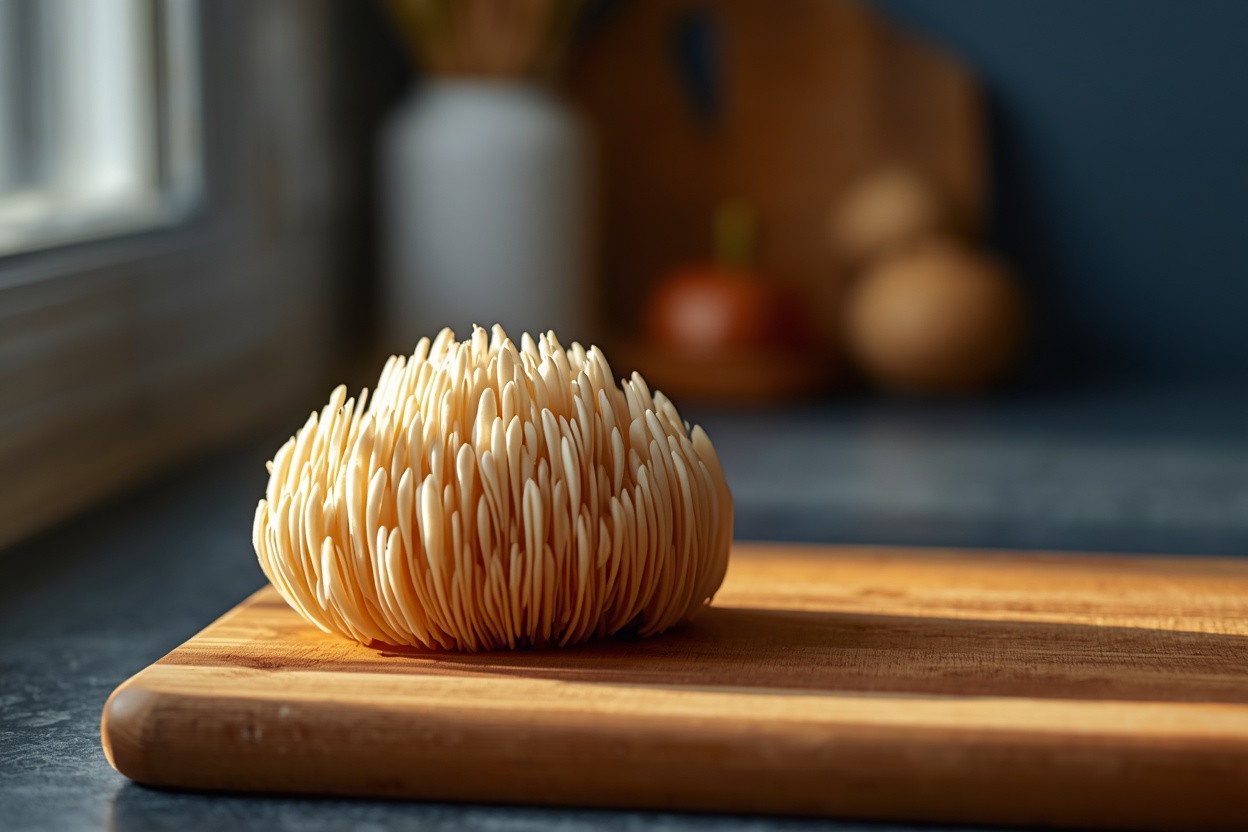
What Lion’s Mane does to nerve growth factor
Lion’s Mane (Hericium erinaceus) is an edible mushroom with two bioactive compound classes: hericenones and erinacines. Hericenones concentrate in the fruiting body. Erinacines concentrate in the mycelium. Both stimulate nerve growth factor (NGF) synthesis in laboratory studies. NGF supports the survival and growth of neurons in the hippocampus and cortex.
How it works
Erinacines cross the blood-brain barrier in animal models. Once inside, they activate NGF gene expression in astrocytes. A 2023 study from the University of Queensland identified a second mechanism: a compound called NDPIH activates the ERK1/2 growth pathway independently of NGF. This means Lion’s Mane may support neuroplasticity through at least two distinct routes.
These mechanisms are well documented in cell and animal studies. Human confirmation is limited. The trials below translate some of these findings into measurable cognitive outcomes.
The 16-week MCI trial: what improved and what faded
Mori et al. (2009)
Thirty Japanese adults aged 50 to 80 with mild cognitive impairment (MCI) were randomized to 3 g of Lion’s Mane dry powder or placebo daily for 16 weeks. Cognitive function was measured with the Revised Hasegawa Dementia Scale (HDS-R) at weeks 8, 12, 16 and 20.
The Lion’s Mane group showed significant improvement on HDS-R at weeks 8, 12 and 16 compared to placebo. At week 20 — 4 weeks after stopping the supplement — scores had dropped back toward baseline. The authors concluded that Lion’s Mane is effective for improving cognitive function but requires sustained intake. The benefits are not permanent.
Saitsu et al. (2019)
Adults with cognitive concerns took Lion’s Mane fruiting body extract at 2.4 g daily for 12 weeks. The Mini-Mental State Examination (MMSE) improved significantly compared to placebo. The authors noted that oral intake appears safe and convenient for cognitive support but emphasized that larger trials are needed.
The young adult data: mixed and inconclusive
Docherty et al. (2023)
Forty-one healthy adults aged 18 to 45 took 1.8 g of Lion’s Mane daily or placebo for 28 days. The study tested both acute effects (single dose) and chronic effects (28 days). After a single dose, participants performed faster on the Stroop task at 60 minutes (p=0.005). After 28 days, there was a trend toward reduced subjective stress (p=0.051) but no significant improvement in memory or sustained attention.
Frontiers in Nutrition (2025)
Eighteen healthy adults aged 18 to 35 received a single 3 g dose of a 10:1 Lion’s Mane extract (equivalent to 30 g fresh fruiting body) or placebo in a cross-over design. There was no significant effect on global cognitive function or mood. Pegboard test performance improved (psychomotor dexterity). However, performance worsened on the Flanker task and Trail Making Test B, both measures of executive function.
What the mixed data means
The strongest evidence comes from older adults with MCI over 12 to 16 weeks. The young adult data is inconsistent: faster Stroop in one trial, worse executive function in another. Small sample sizes (n=18 to 41) and single-dose designs limit confidence. Lion’s Mane may support cognition in aging brains more reliably than in young healthy ones.
Fruiting body vs mycelium: not the same compound
Supplement labels often blur the distinction. Fruiting body and mycelium contain different active compounds. Fruiting body is rich in hericenones and beta-glucans. Mycelium is rich in erinacines. Some products use a mix. Others use myceliated grain, which dilutes the active content with the substrate the fungus grew on.
What to look for on the label
Look for the percentage of fruiting body. Products that list “myceliated brown rice” or “mycelium on grain” contain mostly substrate. Look for beta-glucan content, not just polysaccharide content. Polysaccharides include starch from the grain. Beta-glucans are the active fraction. Extraction method matters: hot water extracts beta-glucans. Dual extraction (water + alcohol) captures both beta-glucans and terpenes.
The Ingredients Hub compares Lion’s Mane to bacopa monnieri and citicoline, which have larger and more consistent human trial data.
Who should avoid Lion’s Mane
Mushroom allergy
Avoid Lion’s Mane if you have any mushroom allergy. Reactions can include breathing problems, racing heart, fever, swollen lymph nodes and swelling of the face, lips or throat. These are not rare. If you have never eaten mushrooms, start with a small amount of the culinary form first.
Asthma
Lion’s Mane should be contraindicated for people with asthma. Spore exposure and fungal proteins can trigger bronchial constriction. The risk outweighs the unproven cognitive benefit.
Common side effects
Itchy skin, rash, nausea, bloating and stomach cramps. These are usually mild and resolve after stopping. Start with a low dose to assess tolerance.
Pregnancy and breastfeeding
Insufficient safety data. Avoid use during pregnancy and lactation.
The bottom line
Lion’s Mane improved cognitive scores in a small 16-week trial of adults with mild cognitive impairment. The benefits required sustained intake and faded after stopping. Two trials in healthy young adults produced mixed results: faster reaction time in one, worse executive function in another. The sample sizes were small.
For adults over 50 with memory concerns, Lion’s Mane is a plausible but unproven option. The evidence is weaker than for bacopa monnieri at 300 mg for 12 weeks or citicoline at 500 mg for 12 weeks. If you try Lion’s Mane, commit to 16 weeks, choose a fruiting-body product with verified beta-glucan content, and stop immediately if you develop skin itching or breathing difficulty.
Frequently Asked Questions
How long before Lion’s Mane improves memory?
Mori et al. (2009) measured benefits at 8 weeks, with further improvement at 12 and 16 weeks. The effect faded 4 weeks after stopping. Judge Lion’s Mane at week 16, not week 2.
What dose of Lion’s Mane is backed by research?
3 g daily of dry fruiting body powder for 16 weeks. This is the dose from the Mori 2009 MCI trial. A 2023 trial used 1.8 g daily for 28 days in healthy young adults. A 2025 trial used 3 g of a 10:1 extract as a single dose. Consistency across studies is poor.
Does Lion’s Mane work for everyone?
No. The 2009 trial found benefits only in adults with mild cognitive impairment. The 2023 and 2025 trials in healthy young adults showed mixed or null results. Individual response varies by age, baseline cognition and product quality.
Is Lion’s Mane safe for seniors?
Mori et al. (2009) studied adults aged 50 to 80 with MCI and found 3 g daily safe for 16 weeks. Seniors with mushroom allergies, asthma or autoimmune conditions should avoid it.
Can I take Lion’s Mane with other supplements?
There is no published evidence of harmful interactions with bacopa, citicoline or phosphatidylserine. Start one ingredient at a time. Judge each at its studied duration before adding another.
What is the difference between fruiting body and mycelium?
Fruiting body contains hericenones and beta-glucans. Mycelium contains erinacines. Myceliated grain products contain mostly the grain substrate. Look for labels that specify fruiting body percentage and beta-glucan content, not just polysaccharides.
Does Lion’s Mane cause permanent brain changes?
No evidence supports this. The 2009 trial found that cognitive scores dropped back toward baseline within 4 weeks of stopping. Any benefits require sustained intake.
Should I take Lion’s Mane on an empty stomach?
Take it with food to reduce nausea and stomach cramps. Unlike bacopa, it is not fat-soluble, so dietary fat is not required.
Sources and References
- Saitsu et al. (2019) — Lion’s Mane and Cognitive Function, Biomed Res, PMID 31413233
- Docherty et al. (2023) — Acute and Chronic Effects in Healthy Adults, Nutrients, PMC10675414
- Lion’s Mane Mushroom — Uses, Side Effects, and More — WebMD
- Lion’s Mane — Examine.com
- Lion’s Mane — Merck Manuals (Consumer Version)
Need help choosing?
RecallPath does not sell supplements. We publish facts for readers over 40.
Email us