
Honey for Memory: What the Research Actually Shows
A spoonful of honey each morning will not protect your memory, and it will not slow dementia. The honest evidence is smaller and more interesting than the viral “honey ritual” posts suggest. Honey contains polyphenols that show memory effects in rodent studies, and a handful of small human trials, one lasting five years, report promising numbers. Researchers who review this literature describe it as limited and not yet generalizable. Meanwhile, the jar itself is roughly 82 percent sugar. This page separates what the honey trick claims from what the studies show, and what the sugar content means for the people most tempted to try it.
Written and fact-checked by RecallPath Editorial Team. Last updated: . About our editorial process.
- The viral claim: a morning spoon of honey, sometimes attributed to TV doctors, protects memory or prevents dementia. We could not verify the recipe in Dr. Sanjay Gupta’s own published materials.
- The real evidence: small human trials, including one 5-year study in adults over 65 with mild cognitive impairment reporting dementia conversion in under 7 percent of honey users versus about 28 percent on placebo. One study, never replicated.
- The honest review verdict: research on honey and cognition “remains limited and ungeneralizable” (News-Medical review of the literature, 2025).
- The arithmetic: one tablespoon of honey carries 64 calories and about 17 grams of sugar, with an estimated 1 to 18 milligrams of polyphenols. A handful of berries delivers more of the same compounds for a fraction of the sugar.
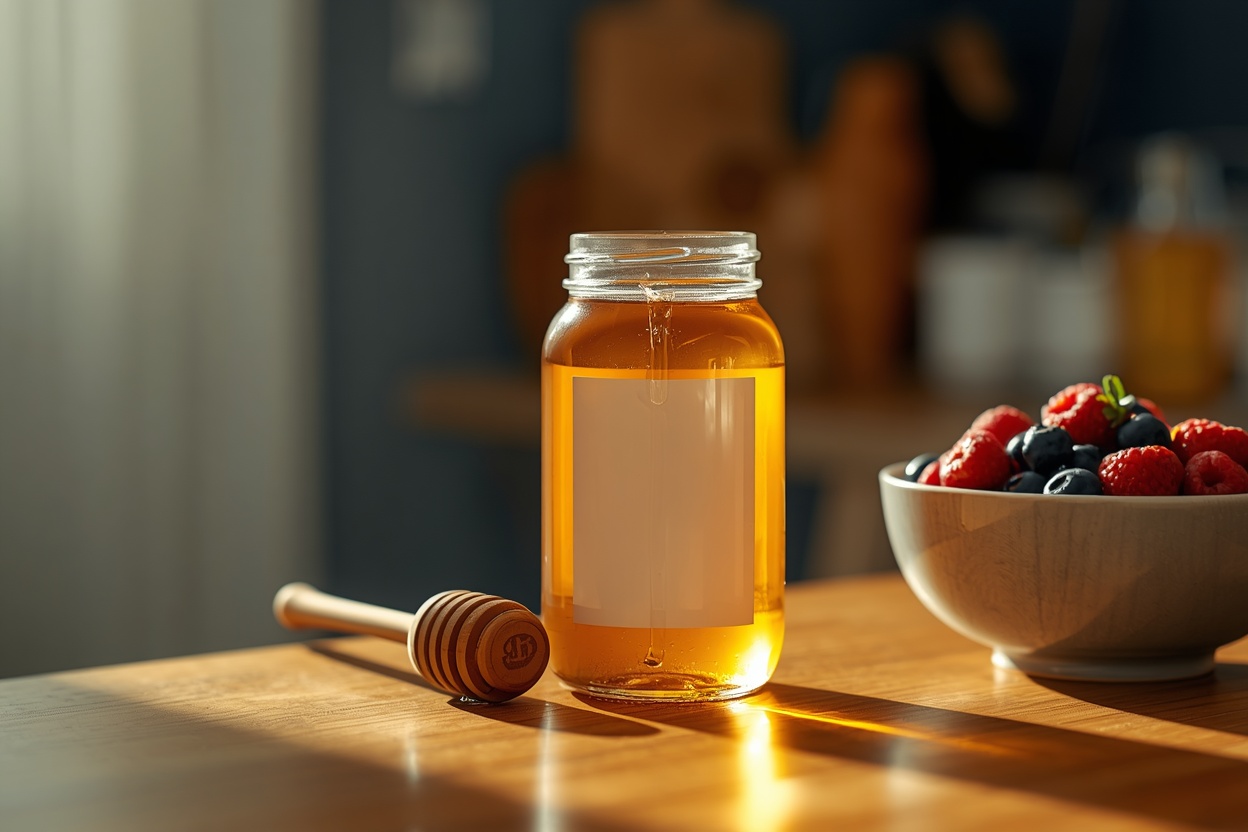
What the honey ritual claims
The “honey trick” follows the template of every viral memory cure: a familiar kitchen item, a simple ritual (a spoonful each morning), a borrowed authority (videos and blogs attach the routine to neurologists and TV doctors), and a promise that fits in one sentence. Some versions of the claim specify raw honey, some add lemon or warm water, some escalate to “prevents Alzheimer’s.” What they share is the gap between the size of the promise and the size of the evidence. On the attribution specifically: searches for the “Sanjay Gupta honey recipe” surface the claim widely, but we could not locate such a recipe in Dr. Gupta’s own books, columns, or broadcast transcripts. When a health ritual cannot be traced to the person it borrows, that is data.
What is actually in the jar
Honey is a sugar syrup made by bees. Carbohydrates make up 95 to 97 percent of its dry weight: about 41 grams of fructose and 36 grams of glucose per 100 grams, plus water and trace compounds. One tablespoon (21 grams) delivers 64 calories and about 17 grams of sugar. The compounds that drive the memory claims are polyphenols, which are real: honey contains dozens of them, including quercetin, kaempferol and gallic acid. But total polyphenol content varies widely by floral source, from about 50 to 850 milligrams per kilogram. Do the division and a tablespoon of even the richest honey carries under 20 milligrams of polyphenols. A handful of blueberries delivers more, with less sugar and more fiber.
The dose problem, in one box
The polyphenol studies that generate headlines use concentrated extracts or rodent doses scaled to body weight. The honey ritual delivers roughly 1 to 18 milligrams of polyphenols per tablespoon, varying up to seventeen-fold between honeys. That is not a dose anyone has tested for memory in a controlled trial. It is a pleasant amount of sweetener with a biologically trivial amount of the active compounds attached.
The human evidence, study by study
| Study | Population | What it found | Why to stay cautious |
|---|---|---|---|
Al-Himyari trial (cited in honey reviews) |
Adults 65+ with mild cognitive impairment |
1 tablespoon daily for 5 years; under 7% of honey users developed dementia versus about 28% on placebo |
A single study, reported through review papers, not replicated independently |
Khan et al., 2023 (J Nutr Health Aging) |
Older adults, randomized controlled trial |
Honey consumption improved cognitive function measures |
Small sample, short duration, single center |
Postmenopausal women study |
Women 45-60, 20 g Tualang honey daily, 16 weeks |
Improved learning and memory scores on a verbal learning test |
Small cohort, one honey variety, short window |
Depressed elderly study |
Adults 60+, honey-based Talbinah drink, 6 weeks |
Improvements in depression, stress and mood scores |
Mood outcome, not memory; crossover design, small group |
Read the table as a whole and a pattern emerges: small populations, short durations, single centers, specialized honeys, and outcomes reported by the same research community that studies honey. None of this makes the findings false. It makes them preliminary. The 2025 review of honey and Alzheimer’s research in the scientific press put it plainly: the literature “remains limited and ungeneralizable.”
The rodent evidence, honestly labeled
The mechanistic story is better developed in animals, and it is worth knowing exactly as far as it goes. In rats, honey and its polyphenols raise BDNF, a growth factor involved in learning and memory; reduce oxidative stress markers in the hippocampus; and lower acetylcholinesterase activity, the same enzyme targeted by Alzheimer’s drugs. Middle-aged rats fed honey outperformed sucrose-fed and sugar-free controls on spatial memory tasks. This is real, publishable, interesting science. It is also the classic gap between rodent neuroscience and human dementia prevention, a gap that has swallowed far more promising compounds than honey. No one should budget their Alzheimer’s risk around rat hippocampi.
The part the honey trick videos skip
- It is sugar first. Seventeen grams per tablespoon. For people with diabetes, prediabetes or insulin resistance, a daily honey ritual is a daily sugar ritual with better marketing.
- Calories count after 50. An extra tablespoon a day is roughly 450 calories a week. That is the arithmetic of slow weight gain, and weight gain feeds the same cardiometabolic risks that genuinely threaten cognition.
- Never for infants. Honey carries a botulism risk for children under one year. The ritual has a hard age floor, whatever the videos say.
- Substitution beats addition. If honey replaces table sugar in tea or baking, the swap is neutral-to-slightly-positive. If it adds to an unchanged diet, it is just extra sugar.
If memory is the real concern
The treatable causes of memory complaints have not changed: B12 deficiency (roughly 6 percent of adults over 60), thyroid dysfunction, depression, medication effects, poor sleep. A blood panel finds most of them in one visit. Our B12 guide covers the first item on that list. After the workup, the ingredients with positive human trials at specific doses are mapped in our memory supplements hub. Honey is a food. It deserves a place in the kitchen, not in the treatment plan.
The bottom line
Honey for memory is not a scam and not a cure. It is a reasonable food with preliminary, unreplicated evidence, wrapped in viral claims that outrun it by a mile. If you enjoy honey, take it instead of sugar, not in addition to it. If you are worried about your memory, take the worry to a blood test. The honey spoon will still be there afterward.
Frequently Asked Questions
Does honey help with memory loss?
The evidence is preliminary. Small human trials report cognitive benefits, including one 5-year study in older adults with mild cognitive impairment, but none have been independently replicated, and reviewers describe the literature as limited. Honey shows memory effects in rodent studies, which do not reliably translate to humans. It is not a treatment for memory loss.
What is the Sanjay Gupta honey recipe?
We could not verify it. The search phrase circulates widely in videos and blogs promoting a morning honey routine for memory, but we could not find such a recipe in Dr. Gupta’s own books, columns, or broadcast transcripts. When a health ritual cannot be traced to the expert it borrows, treat the attribution as part of the claim being sold, not as evidence.
Is honey better than sugar for the brain?
Marginally, as a swap. Honey and table sugar are both mostly glucose and fructose; honey adds trace polyphenols, roughly 1 to 18 milligrams per tablespoon depending on variety. Replacing sugar with honey is a small upgrade. Adding honey to an unchanged diet is just additional sugar, which works against the metabolic health your brain depends on.
How much honey per day is reasonable?
As a sweetener, one tablespoon fits most diets at 64 calories and 17 grams of sugar. People with diabetes or prediabetes should count it as sugar and discuss amounts with their clinician. There is no studied “memory dose” of honey in humans, so no ritual amount has evidence behind it.
Does raw honey work better than regular honey?
Raw honey retains slightly more pollen and propolis, and its polyphenol content can be higher, but the difference is small in absolute terms: still under 20 milligrams per tablespoon. No human memory trial has compared raw versus processed honey head-to-head. Either way, it remains a sugar with trace actives, not a supplement.
Can honey prevent dementia?
No one can currently claim that. The most-cited human study reported lower dementia conversion in honey users over five years, but it is a single, unreplicated trial. The established levers for cognitive risk remain exercise, blood-pressure control, sleep, hearing, social engagement and diet pattern. Honey is not on that list.
Sources and References
- Honey as an antioxidant therapy to reduce cognitive ageing – PMC review
- Honey on brain health: A promising brain booster – PMC review
- Can honey protect your brain? Study reviews its potential against Alzheimer’s – News-Medical, 2025
- Honey and Alzheimer’s Disease: Current Understanding – Antioxidants (MDPI), 2023
- Raw honey nutrition and antioxidant content – Healthline
Need help choosing?
RecallPath does not sell supplements. We publish facts for readers over 40.
Email us